


Bird Cage Screen Enclosures: Pros, Cons, and Design Tips
Primary Purposes and Material Selection for Bird Enclosure Screens
Whether you are enclosing a spacious pool area in Bonita Springs or creating a secure outdoor aviary for exotic pets, selecting the proper bird cage screen material dictates the long-term durability, visual clarity, and protection of your outdoor space. In Southwest Florida construction, a “bird cage” frequently refers to the sweeping aluminum screen structures surrounding lanais and swimming pools. However, many homeowners also design these structures or custom enclosures specifically to keep pet birds safe outdoors while excluding native wildlife, predatory birds, snakes, and nuisance pests.
A well-designed bird cage screen serves three main purposes:
- Safety and Security: Retaining pets or creating a safe barrier around swimming pools while excluding predators like hawks, raccoons, and snakes.
- Environmental Control: Shielding your lanai from harsh direct sunlight, falling tree leaves, and tiny insects like Florida’s notorious no-see-ums.
- Property Enhancement: Extending your usable living space with a clean, low-maintenance enclosure that matches your home’s architecture.
Comparing Screen Materials: Stainless Steel, Aluminum, and Synthetic Mesh
Selecting the ideal screening material requires weighing strength, corrosion resistance, flexibility, and cost. Below is a breakdown of the primary materials used across residential patio bird cages and pet aviaries:
- Stainless Steel Mesh: The gold standard for high-strength requirements and pet safety. Grade SS304 is ideal for standard outdoor structures, while marine-grade SS316 offers ultimate resistance against coastal salt spray on Sanibel or Pine Island. High-grade options like a Square Hole 1/2 Inch 20 Gauge 316 Stainless Welded Screen For Bird Aviary provide unmatched corrosion resistance and chew-proof security.
- Aluminum Mesh: Highly malleable and easy to shape around custom frames. Standard aluminum aviary mesh often comes in 1×1 or 2×2 mesh configurations with wire diameters ranging from 0.063 inches to 0.080 inches. It provides an attractive balance between affordability and strength, though it can bend under heavy structural impacts.
- Fiberglass and Synthetic Screening: Fiberglass and polyester mesh are the standard choices for residential pool bird cages. Polyester screening offers high tensile strength and tear resistance, making it ideal for Florida wind loads.
- Nylon Netting: A lightweight, low-cost option often used as secondary shade covers over pet aviaries, though it lacks the bite resistance needed for strong-beaked birds or persistent predators.
| Material | Pros | Cons | Ideal Application |
|---|---|---|---|
| SS304 / SS316 Stainless | Chew-proof, zero toxicity, maximum rust resistance, extreme longevity | Higher initial investment | Aviaries, coastal pool enclosures, pet barriers |
| Aluminum Mesh | Malleable, affordable, lightweight, rust-resistant | Can deform under heavy impact | Standard framing, custom shaped enclosures |
| Heavy-Duty Polyester | Excellent wind tear-resistance, affordable, flexible | Not bite-proof against large rodents or parrots | Residential pool cages, lanais, patio screens |
| Standard Fiberglass | Cost-effective, good basic visibility | Shorter lifespan in heavy UV, prone to tears | Standard patio side panels |
Mesh Density and Aperture Size for Pest and Avian Security
Choosing the correct mesh density—or aperture size—depends on what you need to keep inside and what you want to keep out.
For standard pool and patio enclosures, screen mesh density is measured by the number of strands per square inch:
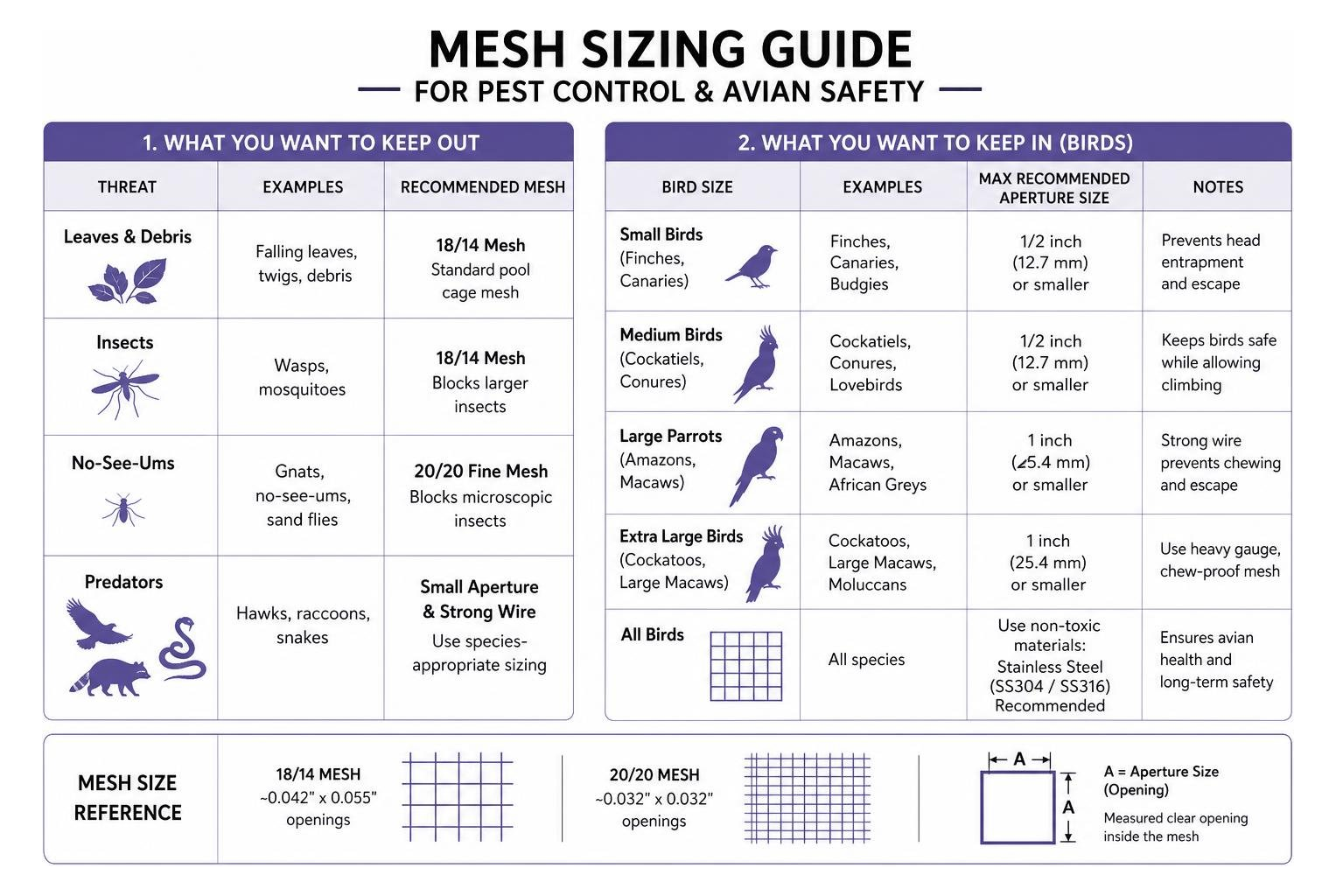
- 18/14 Mesh: Standard pool cage mesh that blocks leaves, debris, and larger insects like wasps and mosquitoes while allowing maximum airflow.
- 20/20 Fine Mesh: Specially designed for coastal Florida, this high-density mesh features tight weave openings that block microscopic gnats and no-see-ums.
When housing pet birds within an enclosure, aperture size is vital to prevent head entrapment and escape. If the screen opening is too large, a bird can push its head through, risking fatal entrapment or injury.
Avian Health, Non-Toxic Materials, and Mesh Construction
When constructing screen enclosures meant to contain pet birds, material composition is a critical safety consideration. Parrots, cockatiels, and other psittacines climb enclosure walls using their beaks as a “third foot.” If the screening contains toxic heavy metals or peeling coatings, the birds risk severe poisoning.
For long-term health and structural peace of mind, choosing safe wire products like 1″ x 1″ x 1/16″ Stainless Steel Parrot Cage Mesh | Non-Toxic HM1625 ensures that climbing birds remain safe from heavy metal exposure while keeping the enclosure entirely chew-proof.
Preventing Heavy Metal Toxicosis and New Wire Disease
“New Wire Disease”—scientifically known as Heavy Metal Toxicosis—is a leading cause of preventable illness and death in captive birds. It occurs when birds chew or climb on galvanized wire or lower-grade metal screens, accidentally ingesting microscopic flakes of zinc, lead, or toxic metallic dust.
- The Galvanized Hazard: Galvanized wire is coated with zinc to prevent rust. As birds grip the wire with their beaks, they scrape off zinc particles. Over time, cumulative zinc ingestion causes organ failure, feather plucking, lethargy, and death.
- The Stainless Steel Solution: Pure 304 or 316-grade stainless steel contains zero zinc and zero lead. It requires no chemical toxic coatings to prevent rust.
- Black Oxide Finishes: For glare reduction, stainless steel can be treated with a black oxide chemical conversion coating. Unlike paint or powder coating, black oxide alters the steel surface itself, meaning it cannot flake, chip, or be peeled off by powerful bird beaks.
Welded Wire vs. Handwoven Intercrimp Mesh Solutions
How metal screen mesh is manufactured directly influences its structural resilience and safety:
- Welded Wire Mesh: Created by spot-welding horizontal and vertical wires at junction points. While rigid and easy to cut into flat panels, welded points can leave sharp metal burrs if not carefully finished. Furthermore, strong birds like Macaws can put intense point-pressure on single welds, causing individual joints to snap.
- Handwoven (Intercrimp/Lock) Mesh: Constructed using interwoven stainless steel wire rope cables secured with hand-interlocked knots. This design provides continuous flex and tension absorption. When a bird climbs or lunges against handwoven rope mesh, the strain distributes across multiple cable strands rather than concentrating on a single weld. Handwoven mesh also eliminates sharp solder burrs, protecting delicate feet and plumage from injury.
Design Options: Balancing Airflow, Sun Protection, and Privacy for Your Bird Cage Screen
Designing a residential pool bird cage in Fort Myers or Cape Coral requires balancing shade, ventilation, visibility, and privacy. To understand complete framing and structure options, homeowners often review How Much Does Enclosing a Lanai Really Cost when planning their outdoor budget.
Privacy Solutions: Florida Glass, Solar Mesh, and Roll-Up Shades
Creating a private sanctuary around your pool or patio shouldn’t force you to sacrifice aesthetic appeal. Several privacy screen options satisfy local Architectural Review Boards (HOAs) while delivering shade and isolation:
- Florida Glass (Vinyl-Laminated Screen): Florida Glass consists of a standard fiberglass screen mesh encapsulated between two layers of clear, durable vinyl. It produces a frosted-glass appearance that blocks views entirely from the outside while keeping dirt and lawn clipping splatters out of your pool deck. However, because vinyl completely blocks airflow, it creates wind resistance that must be accounted for during engineering.
- Solar Screening (80% to 90% Sun Blocking): Heavy-weave solar mesh cuts thermal heat, glare, and UV exposure dramatically, cooling your lanai by up to 15 degrees. During daylight hours, solar screen acts as a one-way mirror, providing excellent interior privacy. At night, when interior lanai lights are switched on, dark solar screening becomes transparent from the outside.
- Motorized Roll-Up Shades: For maximum versatility, track-guided motorized shades allow you to lower privacy panels or rain barriers with a remote control, rolling them neatly into aluminum housings when full airflow is desired.
Species and Enclosure-Specific Options for Your Bird Cage Screen
If your enclosure is built to house specific bird species, screen specifications must match the bird’s size, beak strength, and behavior:
- Finches and Canaries: Require tiny aperture spacing (1/2″ or smaller) with fine wire gauges to prevent escape and block small predators like snakes or mice.
- Parakeets, Cockatiels, and Conures: Need 1″ x 1″ aperture mesh with 1/16″ stainless steel cable. This aperture prevents head entrapment while giving their zygodactyl feet (two toes forward, two toes back) an ideal climbing grid.
- African Greys and Amazons: Medium-to-large parrots exert over 200 PSI of beak pressure. They require 1.5″ x 1.5″ aperture mesh made from 1/16″ or 3/32″ stainless steel rope cable.
- Macaws and Cockatoos: Large psittacines require heavy-duty 2″ x 2″ aperture mesh constructed from 3/32″ heavy stainless steel rope to withstand continuous chew-climbing.
Structural Installation Techniques and Weather Resilience

A pool bird cage screen enclosure in Southwest Florida must withstand extreme summer heat, humid salt air, and sudden tropical storm winds. Proper engineering, frame anchoring, and screen tensioning ensure your investment endures for decades. Homeowners planning new structures should read our detailed guide on how to Hurricane Proof Your Screened Enclosure.
Frame Attachment Methods Across Wood, Aluminum, and PVC
Securing screen mesh tightly to support framing requires specific fastening systems depending on the structural material:
- Extruded Aluminum Frames: Standard in Florida pool cage construction. Extruded aluminum members feature built-in spline channels. Screen mesh is pulled taut across the frame opening and locked securely into the channel using rubber or vinyl spline tubing driven by a splining roller.
- Wooden Structural Framing: Used primarily for custom timber lanais or wood-framed aviaries. Screen is rolled along the wooden frame, stapled with stainless steel staples, and covered with wood trim battens for a clean appearance.
- PVC Frame Structures: Common for temporary or lightweight shade aviaries. Screen mesh is wrapped over PVC pipe and secured using snap-clamps or laced tightly with stainless steel tie wire.
Weather Protection, Rust Prevention, and Maintenance
To protect outdoor enclosures in coastal climates like North Fort Myers, Cape Coral, or Fort Myers Beach, maintenance and correct material grades are vital:
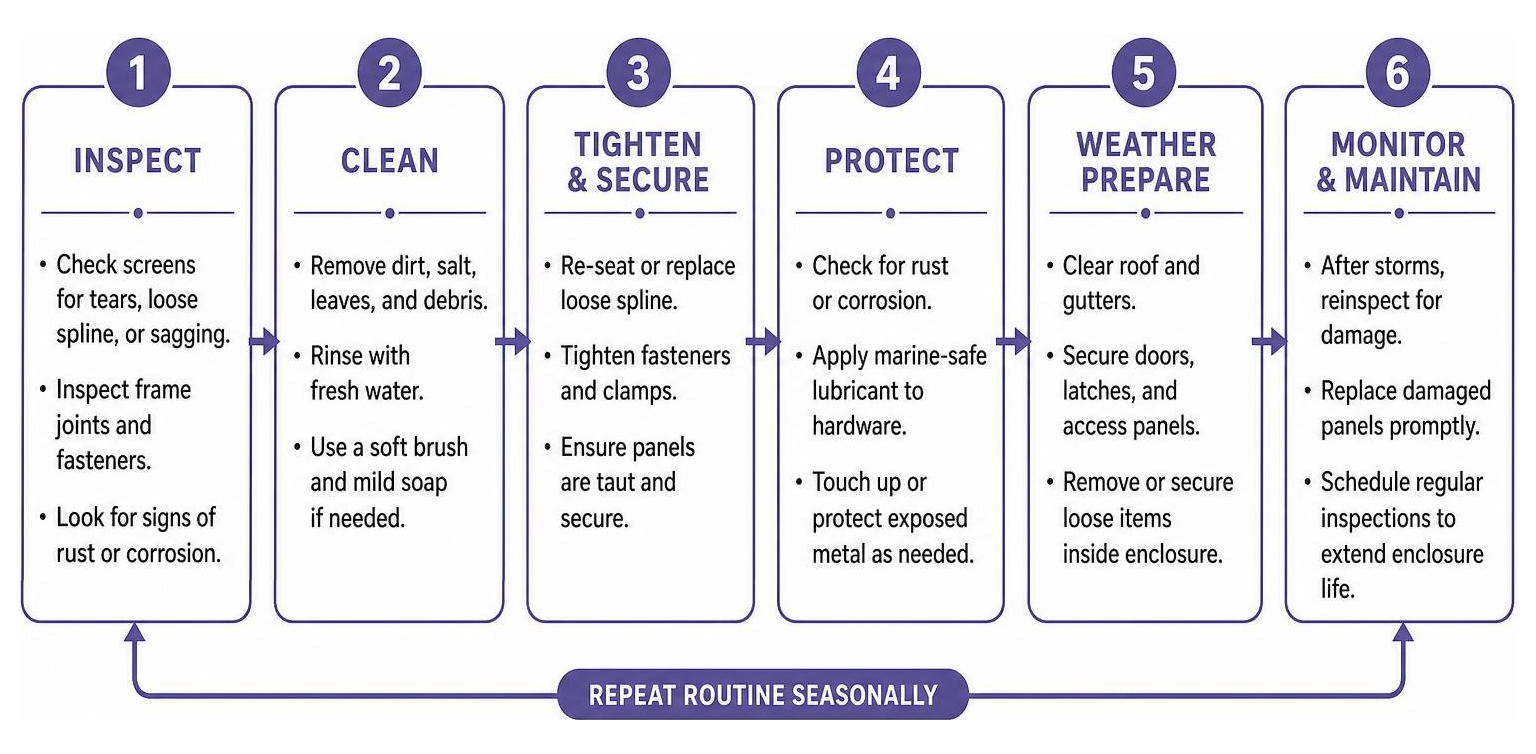
- Coastal Grade Hardware: Always insist on 316-grade stainless steel fasteners, concrete anchors, and lacing wire if your home is within 5 miles of salt water. Standard zinc-plated steel screws will corrode rapidly in coastal salt air.
- Rescreening and Maintenance: Over time, heavy storm winds or flying debris may damage individual screen panels. Schedule periodic inspection of your spline rubber and panel tension. When multiple panels show wear, a complete Fort Myers Pool Rescreening restores full structural integrity and clarity.
Frequently Asked Questions About Enclosure Screening
What mesh size is best to prevent bugs in a bird cage screen enclosure?
For complete insect protection in Southwest Florida, a 20/20 mesh density is recommended. Standard 18/14 pool screen keeps out flies, wasps, and mosquitoes, but microscopic gnats and no-see-ums can squeeze through standard openings. A 20/20 weave features tighter openings that block tiny insects while still permitting comfortable breeze and air circulation through your lanai.
What is New Wire Disease and how is it prevented?
New Wire Disease (Heavy Metal Toxicosis) occurs when captive birds ingest microscopic particles of zinc or lead by chewing or climbing on galvanized metal wire screen. It leads to severe illness and toxic poisoning. It is prevented by using 100% non-toxic, zinc-free SS304 or SS316 stainless steel screen mesh, or aluminum mesh without heavy metal coatings.
How does Florida Glass privacy screen perform in high winds?
Florida Glass consists of fiberglass screen laminated between solid layers of clear vinyl. Because it forms a solid, wind-impermeable barrier, wind cannot pass through it as it does with open mesh. Consequently, local building codes limit where Florida Glass can be installed—typically only on the lower kick-plate panels of a pool enclosure—to prevent excessive wind resistance during major storms.
Conclusion
A high-quality bird cage screen enclosure transforms your outdoor space, providing shade, insect protection, privacy, and safety for your family and pets. By selecting non-toxic materials, correct mesh densities, and hurricane-resistant framing, you create a beautiful outdoor living area built to withstand the Southwest Florida environment.
At Aluminum Concepts Construction, Inc., we bring nearly 25 years of specialized aluminum construction experience to every project. Whether you need a brand-new custom pool enclosure, lanai screening, or expert rescreening in Fort Myers, Cape Coral, Bonita Springs, or Sanibel, our team delivers superior craftsmanship backed by local licensing. Explore our complete range of Screening Services or contact us today to plan your outdoor enclosure.
Comments are Disabled