
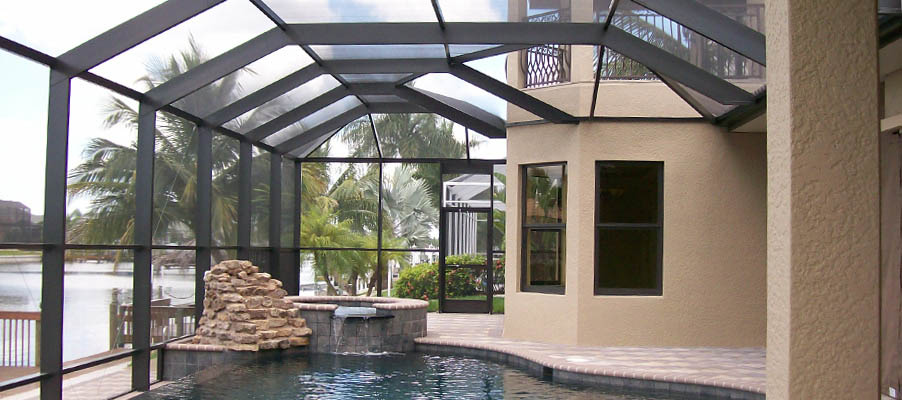
How to Maintain and Restore Your Aluminum Pool Cage
Keep Your Aluminum Pool Cage Clean, Strong, and Ready for Florida Weather
An aluminum pool cage is a screened outdoor structure built around a pool or patio. Its extruded aluminum frame helps keep insects and debris out while creating a shaded, open-air space that needs far less upkeep than wood.
For Fort Myers and Cape Coral homes, the key features to look for are:
- Corrosion-resistant aluminum framing for humid, rainy, and salt-air conditions
- Tight, durable screening to reduce bugs, leaves, and other debris
- Secure doors, fasteners, and screen channels that hold up to daily use
- Sound structural bracing and connections designed for local wind conditions
- A painted finish in good condition to protect the frame and maintain curb appeal
Even a well-built enclosure needs attention over time. Screen tears, loose fasteners, fading paint, white oxidation, and storm wear can make a pool cage look tired or affect how it performs. Regular cleaning and early repairs help preserve the frame, extend screen life, and make larger restoration work easier to plan.
I am Sherman Walker, owner of Aluminum Concepts Construction, Inc., with nearly 25 years in residential construction and custom outdoor aluminum work in Southwest Florida. My experience with aluminum pool cage projects, screened enclosures, gates, gutters, and railings informs the practical maintenance and restoration guidance that follows.
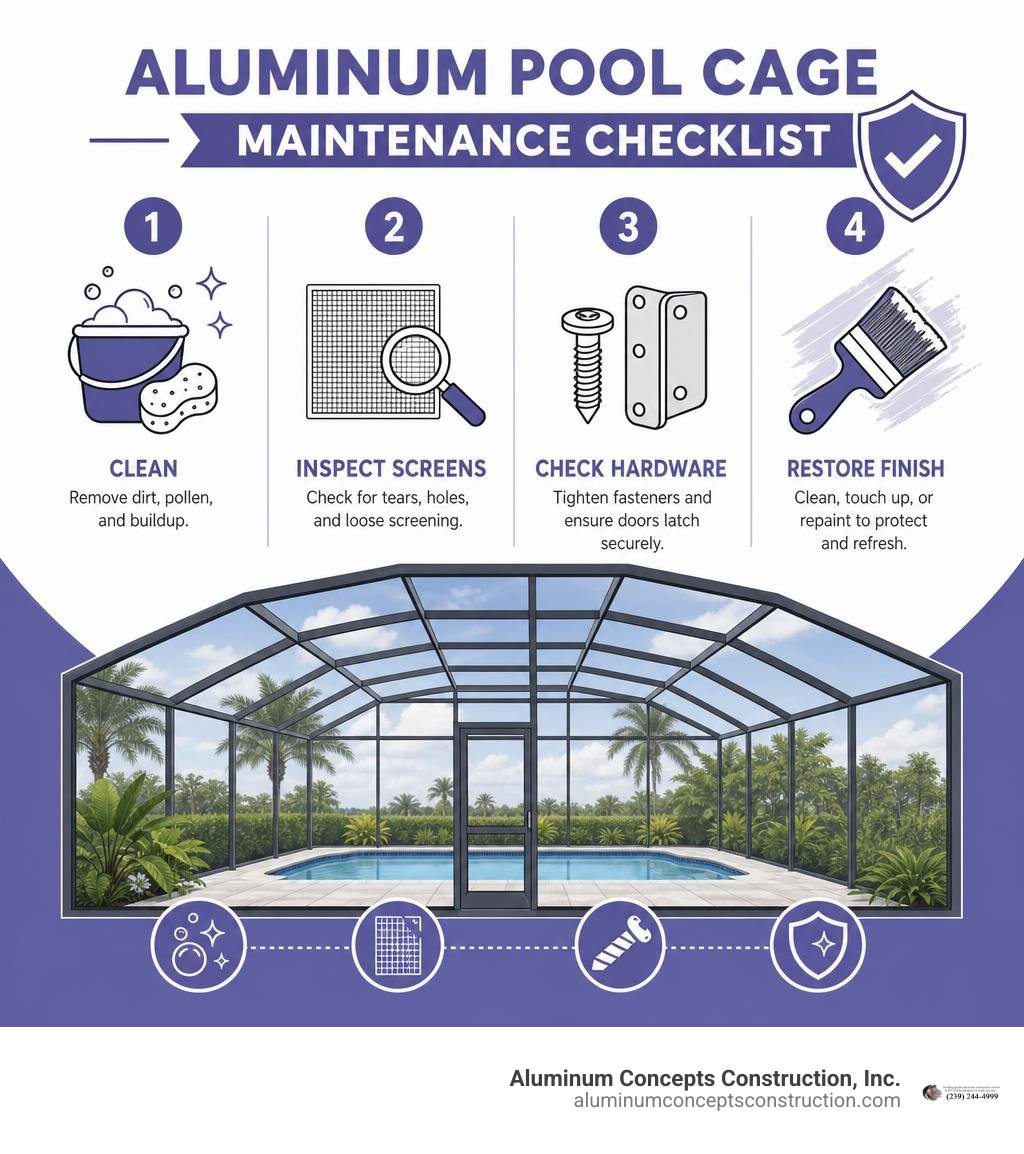
Quick aluminum pool cage definitions:
Understanding Aluminum Pool Cage Extrusions and Structural Components
The long-term performance of any aluminum pool cage depends on the raw structural quality of its components. Unlike temporary patio structures or lightweight plastic screens, engineered pool enclosures utilize high-tensile 6063-T6 aluminum alloy extrusions. This specialized architectural alloy offers an exceptional strength-to-weight ratio, high corrosion resistance, and superb structural stability across broad thermal shifts.
When we evaluate framing for residential projects across Sanibel, Pine Island, and Cape Coral, we look at how individual extrusion profiles work together. Main structural beams, roof purlins, mansard supports, and vertical posts are shaped through heat-treated dies, yielding rigid structural framing capable of spanning large distances without sagging. Additionally, integrated screen channels are extruded directly into the frame members, creating a smooth recess that houses vinyl spline and mesh paneling securely.
For homeowners interested in expanding their shaded living areas, exploring custom Fort Myers Screened Rooms reveals how extruded aluminum creates seamless transitions between indoor living space and outdoor pool decks. Structural framing must be tailored to local geographic wind exposure, coastal salt intensity, and backyard configuration. Browse through our Category/Pool Cages collection to see how engineered aluminum structures are designed for Southwest Florida environments.
Essential Components of an Aluminum Pool Cage
An enclosure is more than just a box of aluminum beams; it is a system of specialized hardware and support materials engineered to handle dynamic loads. Understanding these core components helps you inspect your cage for wear and plan necessary repairs:
- Fasteners and Tapcons: Concrete anchor bolts (Tapcons) anchor the base plates to your deck, while stainless steel or coated ceramic screws fasten beam connections. Over time, salt air can corrode standard steel fasteners, making high-grade stainless steel replacement critical.
- Door Hardware and Hinges: Heavy-duty aluminum screen doors require stainless steel self-closing hinges, pneumatic door closers, and sturdy push-button latches to stay square and secure against wind.
- Vinyl Spline and Screening: The flexible rubber vinyl cord (spline) holds the screening taut inside the extruded frame channel. Spline naturally degrades under intense sunlight, drying out and loosening its grip on the mesh over time.
- Super Gutters: Heavy-duty structural gutters (often 6-inch or 7-inch aluminum profiles) sit between your home’s roofline and the pool cage frame. They carry roof runoff away while simultaneously anchoring the weight of the enclosure roof to your house.
- Diagonal Bracing and K-Braces: Aluminum angle braces and corner gusset plates distribute wind pressure across the structure, protecting primary upright beams from twisting under load.
For more details on components and structural upgrades, check out our tag/poolcages resource hub.
Aluminum Enclosures vs Alternative Materials
Choosing aluminum over wood or steel framing is standard practice in Florida, but understanding why helps when planning long-term care and maintenance.
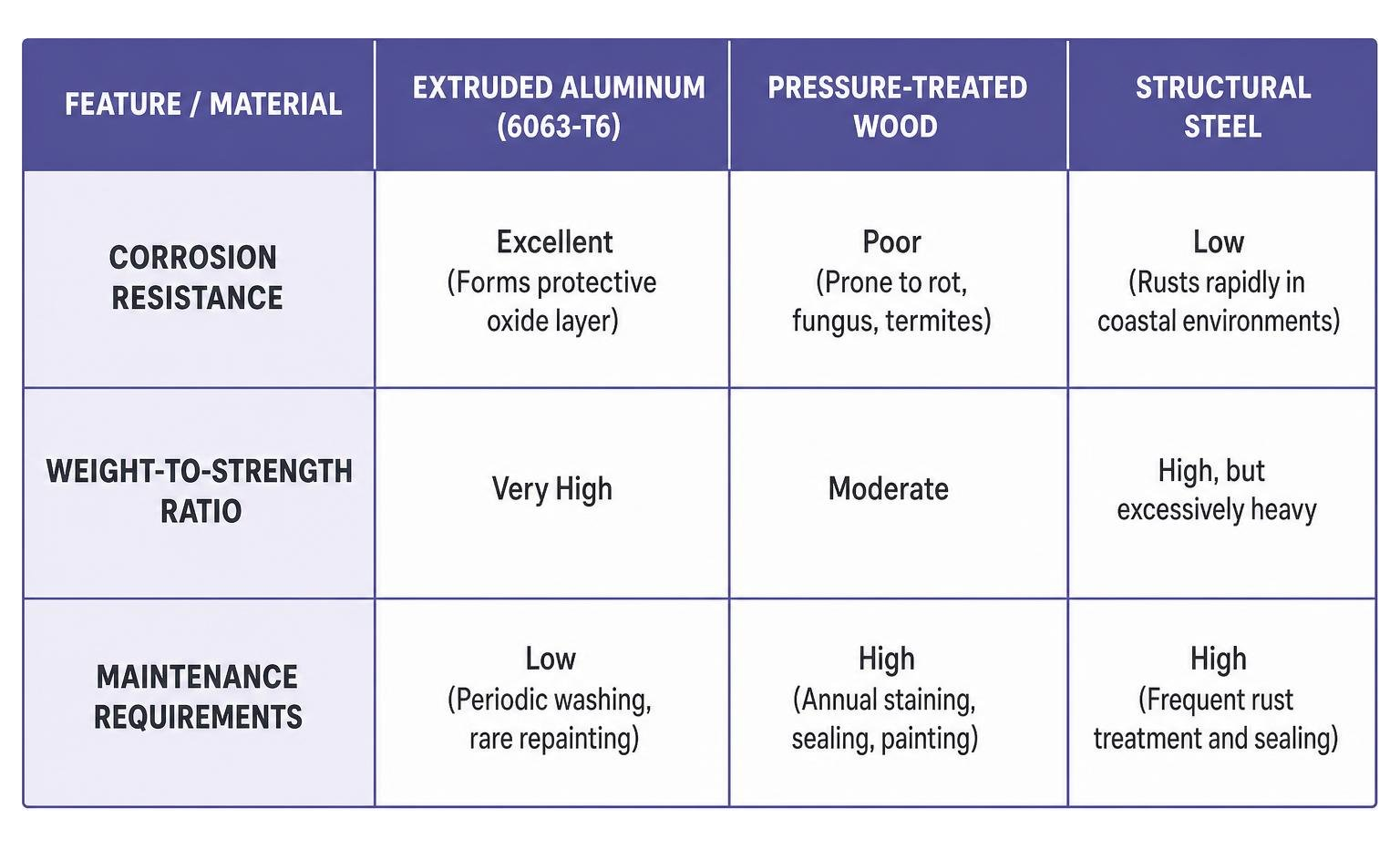
| Feature / Material | Extruded Aluminum (6063-T6) | Pressure-Treated Wood | Structural Steel |
|---|---|---|---|
| Corrosion Resistance | Excellent (Forms protective oxide layer) | Poor (Prone to rot, fungus, termites) | Low (Rusts rapidly in coastal environments) |
| Weight-to-Strength Ratio | Very High | Moderate | High, but excessively heavy |
| Maintenance Requirements | Low (Periodic washing, rare repainting) | High (Annual staining, sealing, painting) | High (Frequent rust treatment and sealing) |
| Average Lifespan | 20–30+ Years | 7–12 Years | 10–15 Years (if heavily coated) |
| Coastal Salt Air Performance | Superior | Moderate (Absorbs moisture and warping) | Very Poor without specialized coatings |
Extruded aluminum framing provides superior longevity with minimal maintenance hassle. Unlike wood, which warp, rot, and attract wood-boring insects, or steel, which rusts quickly in humid salt-air regions like Fort Myers Beach and Bonita Springs, aluminum naturally forms a thin oxide film that protects the core metal from decaying.
Routine Cleaning and Preventative Maintenance Procedures
Even though an aluminum pool cage requires much less care than other outdoor structures, simple routine cleaning is necessary to protect the frame finish and maximize screen strength. Rain, pollen, sprinkler overspray, and airborne dirt build up on frame beams and screen mesh. Over time, environmental contaminants attract algae and mold, which can trap moisture against painted finishes and accelerate coating wear.
To keep your frame and screens looking crisp, follow this straight-forward cleaning process twice a year:
- Rinse thoroughly: Spray down the entire enclosure frame and screen panels with fresh tap water using a standard garden hose to loosen surface dirt and salt deposits.
- Apply a mild soap wash: Mix eco-friendly dish soap or specialized mild outdoor cleaner in a bucket of warm water. Avoid harsh bleach mixtures or abrasive chemical solvents that degrade painted coatings and spline elasticity.
- Scrub gently: Use a soft-bristle brush attached to an extension pole to clear away dirt, algae, and bird droppings from overhead beams and screen channels.
- Rinse clean: Flush all soap suds away completely with clean water. Ensure no detergent remains trapped inside structural screen channels or super gutter drains.
For homes near salt water in Pine Island or Sanibel, salt air mitigation is mandatory. Coastal winds leave invisible salt films on aluminum extrusions. As high sun exposure heats the metal, these salt deposits accelerate surface pitting and paint chalking. Washing down your pool cage monthly with fresh water neutralizes salt build-up and keeps painted extrusions looking brand new. Explore our dedicated tips on screen care in the category/screening guide.
Restoring an Aging Aluminum Pool Cage Frame
When an older enclosure displays signs of heavy oxidation, flaking paint, or sagging screen mesh, a complete structural restoration is often a cost-effective alternative to full teardown and replacement.
Restoring an aging frame typically follows a structured step-by-step procedure:
- Oxidation Removal and Surface Prep: White, chalky powder on extrusions indicates surface oxidation. We pressure wash the frame using controlled pressure, scrub away loose paint with fine steel wool or abrasive pads, and sand rough spots down to bare metal.
- Etching and Priming: Bare aluminum surfaces are treated with a specialized self-etching primer designed to bond with non-ferrous metals, creating a weather-tight chemical bond.
- Frame Repainting: Applying marine-grade polyurethane or fluoropolymer coatings protects the aluminum from UV rays and coastal humidity. Refinishing in bronze or white gives older cages an updated, modern look.
- Fastener Replacement: Old carbon-steel screws are removed and replaced with high-tensile stainless steel or ceramic-coated fasteners equipped with neoprene sealing washers to prevent galvanic corrosion between dissimilar metals.
- Rescreening Techniques: Old spline and torn mesh are removed, screen channels are scraped clean, and high-strength phiferglass or pet-resistant screening is rolled tightly into place with new vinyl spline.
If your enclosure shows heavy screen wear or damaged panels after severe weather, review our comprehensive Fort Myers Pool Rescreening page to learn about structural screening options. To prepare your structure for tropical weather events, visit our Category/Hurricane Readiness section.
Structural Integrity and Hurricane Readiness Best Practices
In Southwest Florida, including North Fort Myers and Cape Coral, structural integrity is directly linked to wind design codes. High winds create massive uplift and lateral forces against pool cage frames. Because screen mesh acts like a wind block during intense storms, every joint, gusset plate, and anchor bolt must hold firm under pressure.
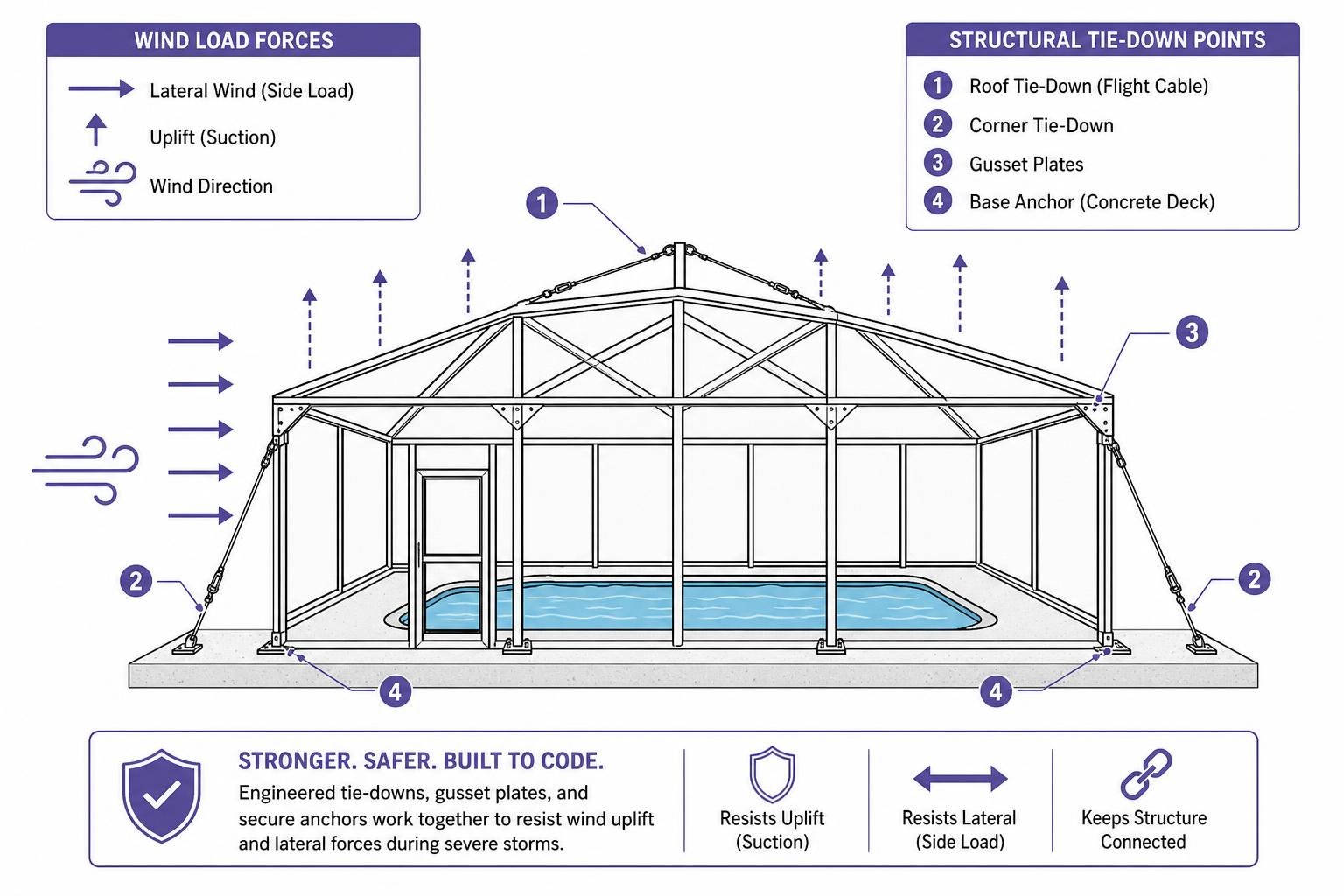
To keep an aluminum pool cage secure during hurricane season, pay close attention to critical structural connections:
- Wind Load Design: Enclosures built to current Florida Building Codes feature thicker extrusion walls, engineered diagonal bracing, and wider footers capable of withstanding extreme wind speeds.
- Hurricane Tie-Downs and Cables: Stainless steel diagonal flight cables and heavy-duty corner tie-downs add pull-down tension, anchoring upper roof trusses to the concrete deck.
- Gusset Plates and Corner Bracing: Thick aluminum plate gussets riveted to beam intersections prevent joints from shearing during intense wind gusts.
- Super Gutter Anchoring: Ensuring the super gutter is tied directly into your home’s roof framing with heavy structural screws keeps the pool cage tied securely to the house.
- Removable Screen Panels: Temporary pressure-relief screen sections can be removed before a major hurricane to let storm winds flow freely through the frame, reducing structural stress.
Homeowners looking to add screened comfort to outdoor patios or enhance structural enclosure stability can review options for tag/screenedenclosures. For more technical details on hurricane retrofitting, check our guides under Tag/Pool Cages and tag/hurricanereadiness.
Frequently Asked Questions About Pool Enclosures
How long does a painted aluminum frame typically last?
An extruded aluminum frame with a factory-applied powder coat or electrostatically applied paint finish typically lasts between 15 and 25 years. In inland areas of Fort Myers, frames easily reach the higher end of this range. However, exposure to intense salt air on Sanibel or Fort Myers Beach can reduce finish life if the structure isn’t washed down regularly. Routine cleaning with mild soap and fresh water clears away corrosive salt and chemical residues, preserving paint color and adhesion for decades.
What causes white chalky powder on aluminum extrusions?
The white chalky substance on an aluminum pool cage frame is aluminum oxide—the byproduct of raw aluminum reacting with oxygen, water, and ambient humidity. When paint finishes degrade from UV exposure, microscopic cracks form in the topcoat, allowing moisture to react with the underlying metal. To fix this, scrub the frame with a non-metallic abrasive pad and mild detergent, apply an etching metal primer, and finish with a high-grade polyurethane topcoat designed for outdoor aluminum structures.
Can an old screen cage be retrofitted for high wind resistance?
Yes, older screen cages can often be upgraded to improve wind resistance without replacing the frame entirely. Retrofitting options include:
- Replacing rusted standard steel screws with high-grade stainless steel or ceramic-coated fasteners.
- Installing stainless steel structural bracing cables and heavy-duty gusset plates at main beam corners.
- Upgrading deck anchors with larger diameter concrete Tapcons or epoxy anchors.
- Replacing thin wall gutters with structural aluminum super gutters anchored to your roof framing.
Conclusion
A well-maintained aluminum pool cage protects your pool deck from debris, keeps insects away, and provides a comfortable outdoor living space for your home. By understanding how extruded aluminum framing works, establishing a routine cleaning schedule, and replacing rusty hardware or worn screening early, you can enjoy decades of reliable performance from your enclosure.
When time and coastal weather begin to show on your enclosure frame, professional restoration—including oxidation treatment, frame repainting, hardware replacement, and structural rescreening—can restore strength and curb appeal at a fraction of the cost of total replacement.
At Aluminum Concepts Construction, Inc., we bring nearly 25 years of specialized expertise in residential construction, custom pool cages, screen enclosures, gates, gutters, and structural repairs to homeowners across Fort Myers, North Fort Myers, Fort Myers Beach, Cape Coral, Bonita Springs, Sanibel, and Pine Island. Whether you need frame repairs, structural hurricane tie-downs, or full rescreening services, our team delivers high-quality aluminum craftsmanship tailored to Southwest Florida conditions.
Ready to restore your pool cage or upgrade your outdoor space? Visit our comprehensive Screen Enclosure Services page today to learn how we can bring long-lasting durability and style back to your backyard!
Comments are Disabled