

How to Protect Your Pool Cage with Golf Ball Proof Screening
Types of Golf Ball Resistant Lanai Screening and Impact Resistance Performance
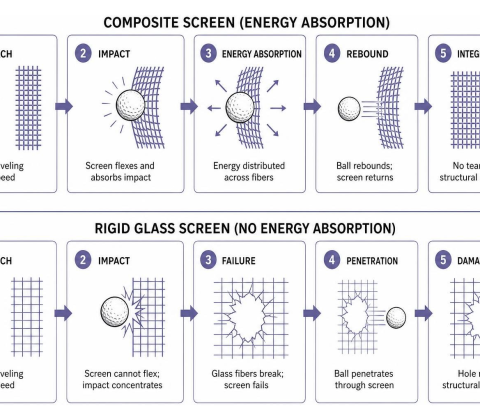
Living on a fairways edge in Southwest Florida is a dream come true for golf enthusiasts—until a sliced drive comes screaming across the yard at over a hundred miles per hour. Standard fiberglass screening offers virtually no resistance to a high-speed direct hit. It tears easily, leaves ragged holes, and requires constant rescreening. Golf ball resistant lanai screening changes the dynamic entirely by absorbing, dampening, and deflecting the kinetic energy of errant shots.
| Screen Type | Material Composition | Ball Burst Strength / Impact Resistance | UV Blockage | Insect Mesh Density |
|---|---|---|---|---|
| Standard Fiberglass | Vinyl-coated glass fiber | ~50–60 lbf | ~30%–40% | 18×14 (Standard) |
| Heavy-Duty Composite | Vinyl-coated polyester | 230–250 lbf / 250 lb/sq ft | 50%–55% | 17×14 or 17×17 |
| High-Impact Super Nano | Extruded composite nano-core | ~338 psi impact force | ~55%–60% | 17×17 |
| Tight-Weave 20/20 Micro Mesh | Poly-coated heavy synthetic | 250 lbf ball burst rating | 50% | 20×20 (No-See-Um) |
The raw numbers behind high-impact screening are impressive. In standardized testing, top-tier composite screens demonstrate a ball burst strength of 250 lb per square foot and can handle impact pressures ranging from 230 to 338 psi. During controlled real-world testing, these screen materials successfully stopped golf balls driven at speeds exceeding 145 mph from distances as close as 30 to 50 feet. Instead of punching through, the golf ball simply bounces off the spring-like surface. If you want to check out technical specifications for micro-mesh high-impact options, view the 20/20 No-See-Um Screen specifications.
Composite Polyester vs Fiberglass in Golf Ball Resistant Lanai Screening
The key difference between standard window screen and golf ball resistant lanai screening lies in the underlying core material. Traditional screens are woven from delicate fiberglass strands coated in thin vinyl. Under direct impact, standard fiberglass possesses minimal lateral stretch; the brittle glass threads snap under tension, creating immediate structural failure.
Heavy-duty high-impact screens utilize dense vinyl-coated polyester or extruded synthetic polymers. This material composition delivers a tear strength over 300% greater than standard fiberglass screen. When a golf ball strikes a composite mesh—whether in a 17×14 or tighter 17×17 mesh weave—the flexible synthetic fibers expand, distribute the energy across adjacent strands, and spring back to their original shape without permanent sag or deformation.
Micro-Pest Protection with 20/20 Mesh Density
A common concern among homeowners in Fort Myers, Cape Coral, and Sanibel is that choosing a screen strong enough to stop a golf ball means converting their airy lanai into a dark, suffocating box. Fortunately, modern textile technology solves this dilemma.
By utilizing a tight 20/20 mesh weave density (20 horizontal and 20 vertical threads per square inch), specialized screens block tiny no-see-ums, gnats, and biting flies while maintaining excellent airflow efficiency and crisp optical clarity looking out over the fairways. These advanced screen options also carry GreenGuard Gold certification, ensuring they meet rigorous low-chemical-emission standards for safe indoor/outdoor air quality around your family and pets.
Key Features: UV Shielding, Mold Defense, and Lifespan
When evaluating screening materials for your pool cage or patio, high impact performance is only part of the equation. Intense Southwest Florida sunlight and high humidity can degrade inferior materials in just a few short years. High-grade golf ball resistant lanai screening incorporates advanced additives directly into the polymer core:
- UV Shielding: Provides 50% to 55% UV blockage, reducing solar heat gain on your patio, protecting indoor floor coverings, and preventing premature fabric breakdown caused by harsh solar radiation.
- Mold & Mildew Defense: Standard screens often trap moisture and organic pollen, leading to unsightly green and black mold growth. High-end screens feature biocide mold inhibitors and built-in Microban antimicrobial protection to stop stain-causing bacteria before it starts.
- Pet & Claw Resistance: The high tensile strength (over 200 lbf) that stops a golf ball also prevents dogs and cats from tearing, scratching, or popping the screen out of its channel.
- Authenticity Verification: Leading high-impact composite screens include an authentic woven Gold Thread directly in the mesh pattern to guarantee you are receiving genuine product performance backed by a 10-year manufacturer warranty and an expected 20-year operational lifespan.
To learn more about custom material configurations for your outdoor space, browse our full selection of Screening options.
Retractable and Motorized Golf Ball Resistant Lanai Screening Options
If you prefer an unobstructed open-air feel during the cooler winter months but want impact and sun shade protection on demand, heavy-duty screening materials can be seamlessly integrated into motorized screen systems and retractable patio enclosures.
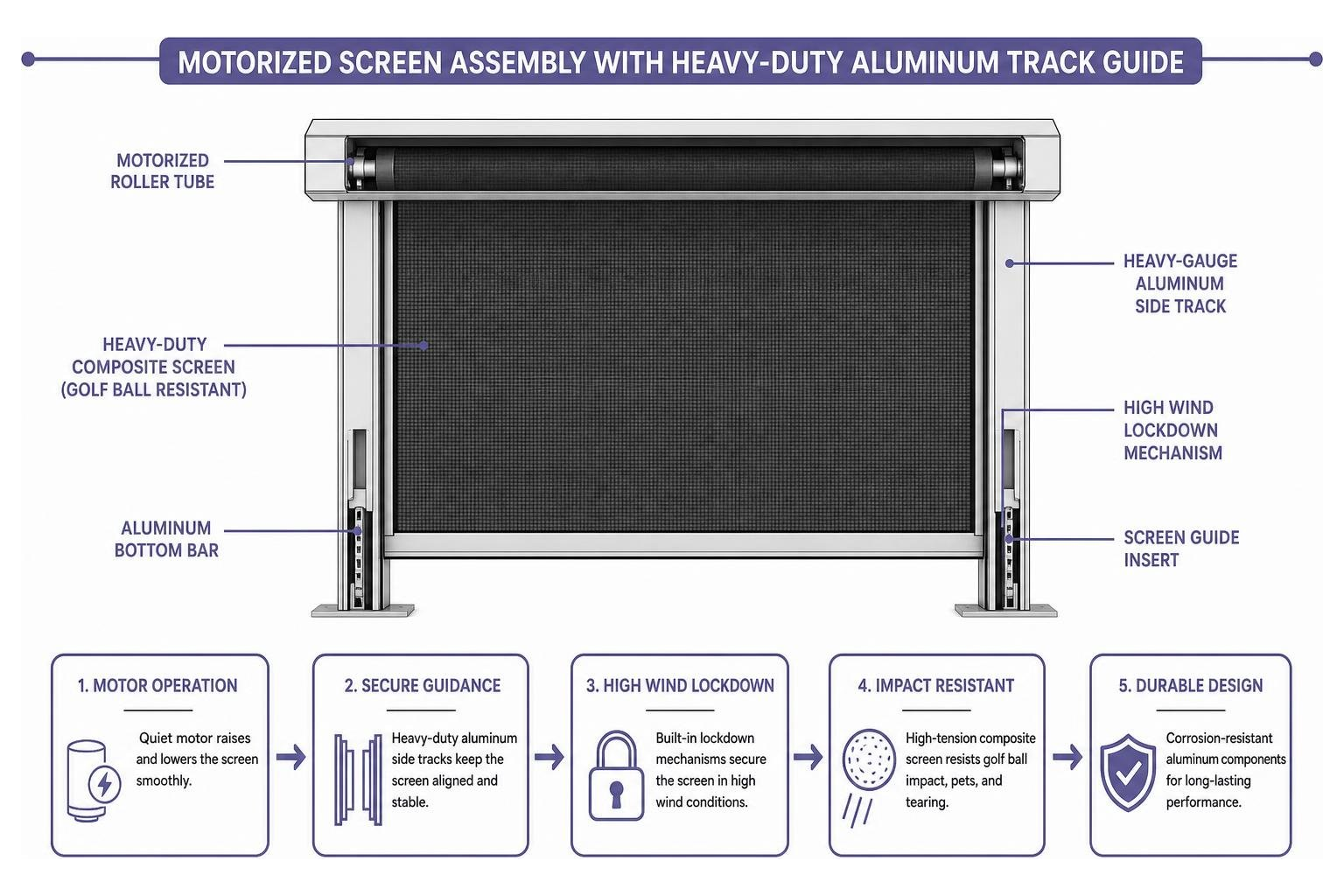
These custom motorized systems utilize heavy-gauge extruded aluminum frames and specialized side tracks to hold high-tension composite screening tightly in place. Many motorized track systems include built-in high wind lockdown mechanisms to prevent high-wind blowouts. For hinged access doors and window panels, continuous hinges and custom-powder-coated aluminum framing preserve structural integrity under heavy impact. To see real-world discussions from homeowners facing fairway impact challenges, read through these Golf ball screen community insights.
Hurricane Resistance, Building Codes, and Wind Mitigation Discounts

A frequent misconception in coastal Florida is that installing strong, tear-resistant screening turns your pool cage into a hurricane-proof barrier. It is crucial to understand the difference between impact deflection and structural storm protection:
- Screen vs. Glass: While high-impact composite screening easily deflects 145 mph golf balls and flying tree branches, screen mesh remains air-permeable. Florida Building Code does not recognize screen mesh as storm opening protection.
- Structural Pool Cage Performance: Heavy-duty screening increases the wind load tension placed on your aluminum cage during severe weather. In strong windstorms, properly installed composite screening transfers load back into the structural cage beams.
- Insurance Discounts: To claim valuable opening protection credits on your homeowner’s insurance wind mitigation inspection (which can save homeowners between $1,800 and $2,700 annually on premiums), all glazed openings (windows and sliding glass doors) behind the lanai must have certified impact glass or hurricane-rated shutters.
When replacing lanai windows or modifying enclosed structures, keep in mind the Florida Building Code’s “25 percent rule”: if you replace or alter more than 25% of the glazed openings on a structure within a 12-month period, the entire system must be updated to meet current high-wind load requirements. Review our detailed Hurricane readiness guide to make sure your home stays safe and code-compliant.
High-Wind Screening and Structural Pool Cage Performance
During major windstorms, weak fiberglass screen often blows out entirely, leaving the underlying aluminum pool frame intact but leaving your pool filled with debris. High-strength composite mesh will not easily tear out under extreme wind pressure. While this provides superior resistance against airborne projectile hazards and windborne yard debris, it also means your pool enclosure frame will bear significantly more wind force. Ensuring your screen cage framing, corner gussets, and anchor bolts are sound is vital before upgrading to heavy-duty screen materials.
Installation Considerations and Cost Analysis
Upgrading to golf ball resistant lanai screening involves more than just swapping fabric rolls. Because heavy-duty composite mesh is thicker and stiffer than light fiberglass, proper frame preparation and professional installation techniques are essential.
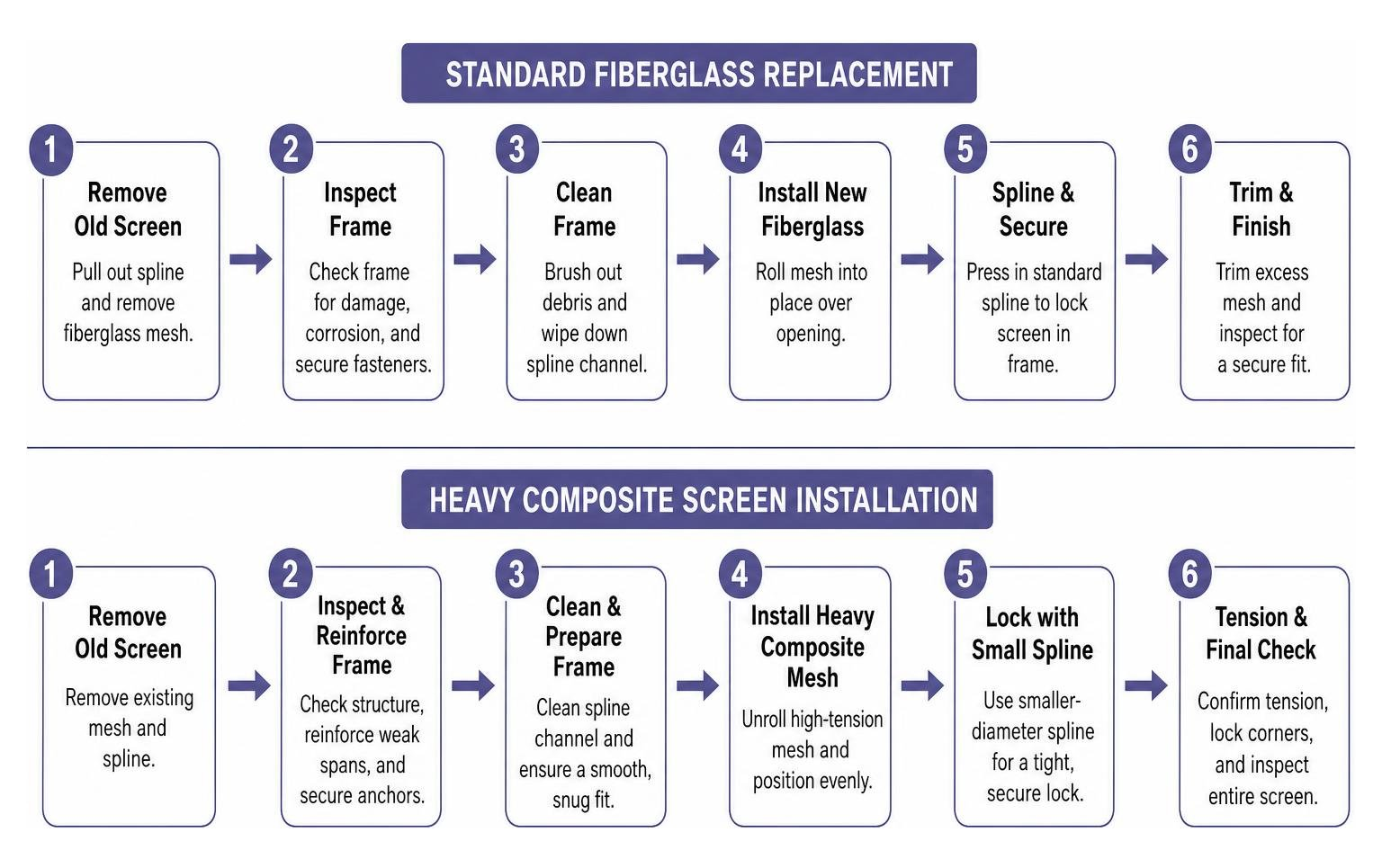
- Extruded Powder-Coated Aluminum Alloy Frames: Framing must be rigidly anchored and free of severe corrosion or oxidation.
- Spline Sizing Requirements: Because heavy-duty synthetic screen has a thicker gauge strand, installers must use specialized, smaller-diameter round or flat spline to securely lock the material into the frame’s aluminum spline channel without cracking the metal track.
- Frame Structural Reinforcement: High-tension screen pulls harder on wide picture-window spans; adding solid aluminum kickplates or extra tie-down cables may be necessary for large pool cages.
- Cost Comparison: Heavy-duty screen material carries a modest premium—typically costing around $0.35 more per square foot than cheap fiberglass. However, because standard screen degrades every 3 to 5 years under Florida sun and golf ball impacts, heavy-duty screening pays for itself multiple times over its 20-year lifespan.
While smaller window screens can sometimes be a DIY project, rescreening wide pool cage panels, elevated mansard roofs, or motorized roller systems requires expert tools, ladders, safety gear, and tensioning experience. Improperly installed heavy-duty screen can cause aluminum frame members to bow inward or buckle under uneven tension. Explore our professional Fort Myers pool rescreening services and get an expert overview of structural stability on our Pool cages structural overview page.
Frequently Asked Questions
How much impact force can a golf ball proof screen withstand?
High-grade composite screen materials are engineered to withstand ball burst forces between 230 and 338 psi, with a dedicated ball burst rating of 250 lbf per square foot. In independent testing, these screens successfully absorb and deflect golf ball drives at speeds over 145 mph from short distances (30 to 50 feet) without puncturing, ripping, or stretching out of shape.
Do golf ball resistant screens block no-see-ums without affecting airflow?
Yes! By selecting a heavy-duty vinyl-coated composite mesh engineered with a 20/20 weave density, you get the double benefit of structural golf ball protection and tight micro-pest filtration. The thin, ultra-strong composite threads allow optimal light transmission and breeze-through ventilation while blocking tiny no-see-ums, gnats, and mosquitoes.
Can golf ball resistant screens qualify my home for insurance discounts?
No, screen enclosures alone do not qualify for hurricane opening protection credits on Florida wind mitigation inspection forms. To qualify for insurance savings (which can equal 30% to 45% of your wind premium), the solid building envelope behind your screened lanai—such as your sliding glass patio doors or windows—must be protected by certified impact-rated glass, hurricane shutters, or rated storm fabrics.
Conclusion

Living alongside a scenic golf course fairway shouldn’t mean spending your weekends dodging errant golf balls or constantly repairing ripped pool cage screens. By investing in modern golf ball resistant lanai screening, you protect your outdoor living space, keep annoying biting insects out, reduce intense glare and UV heat, and preserve beautiful backyard views for decades to come.
At Aluminum Concepts Construction, Inc., our team has served homeowners across Fort Myers, North Fort Myers, Fort Myers Beach, Cape Coral, Bonita Springs, Sanibel, and Pine Island for nearly a quarter of a century. We specialize in custom high-strength aluminum enclosures, picture-view pool cages, structural screen repairs, and premium impact-resistant rescreening. Ready to upgrade your lanai with permanent peace of mind? Explore complete screening solutions or contact our team today to schedule an on-site evaluation!
Comments are Disabled