
Soak in Peace with these Easy Hot Tub Privacy Solutions
Top Architectural Privacy Solutions That Keep Your Yard Open
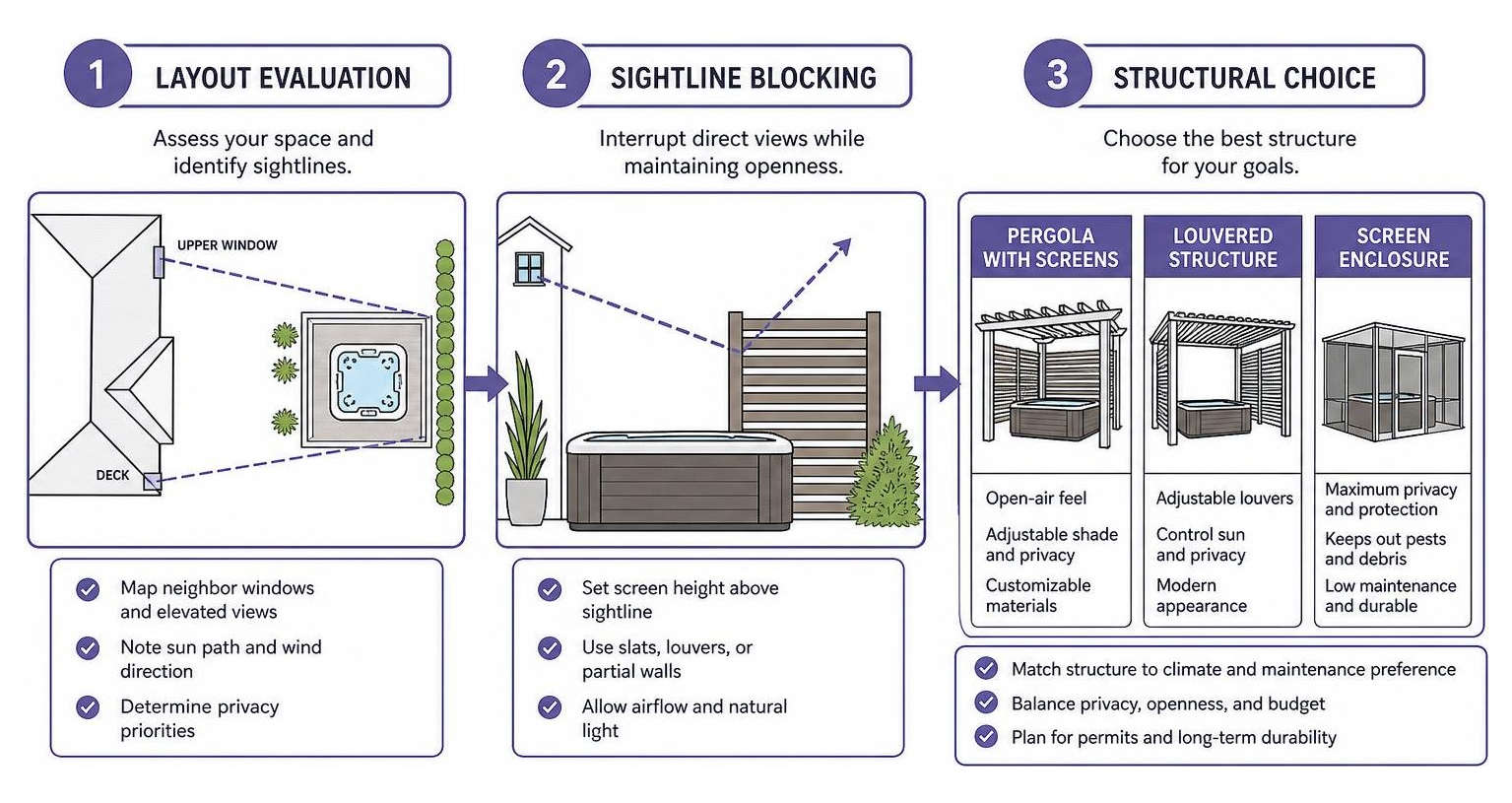
When designing a private spa retreat, structural architectural elements offer a permanent, elegant balance between complete seclusion and open-air freedom. The key is creating visual barriers that interrupt sightlines from second-story neighbor windows or elevated decks without shutting out light and sea breezes.
Pergolas and Open-Air Louvered Structures
Pergolas are among the most versatile architectural choices for spa owners. By utilizing open-rafter roofs or louvered tops, you get partial overhead shade while preserving sky views. To convert a standard wood or aluminum pergola into a functional hot tub privacy screen, you can integrate horizontal slatted side walls, decorative lattice, or adjustable timber blinds.
Staggering horizontal slats with small air gaps gives you the ultimate balance: passersby cannot look directly into your hot tub, but airflow remains unrestricted. Adjustable louvered roof panels also allow you to pivot overhead slats based on the sun’s angle or where neighboring windows overlook your yard. Prefabricated wooden hot tub pergola kits often come with built-in rear privacy walls that double as convenient towel racks and accessory hangers, making them as practical as they are attractive.
Custom Aluminum Screen Enclosures and Lanais
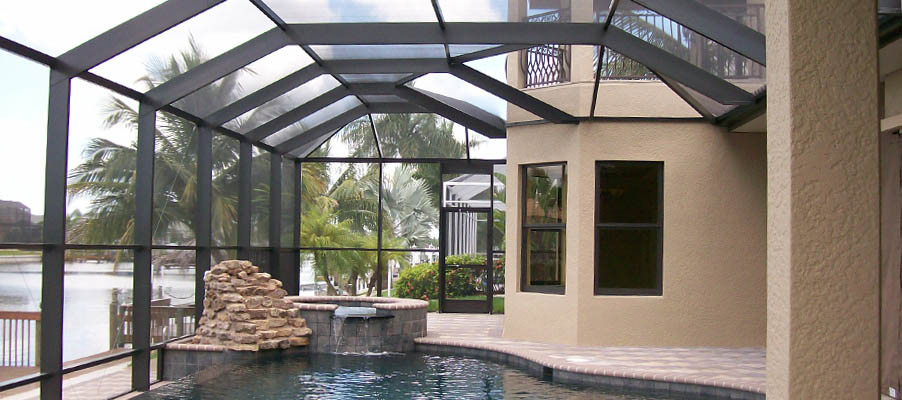
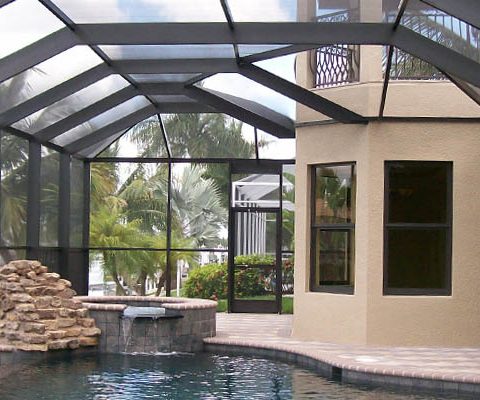
For homeowners in Southwest Florida, custom aluminum enclosures are the premier choice for long-term hot tub screening. A custom-designed lanai or screen room wraps your hot tub in a light, durable frame that keeps out unwanted pests, falling leaves, and intense solar glare while maintaining panoramic views of your surrounding landscape.
Integrating insulated solid roof panels or insulated kick plates onto your aluminum frame blocking direct side views provides instantaneous privacy. Unlike wood, which warps, rots, and demands routine restaining under intense tropical humidity, heavy-gauge powder-coated aluminum requires virtually zero maintenance.
When installed as part of our specialized Fort Myers Screened Rooms, these structures meet strict Florida Building Code standards. By incorporating heavy-duty structural posts and hurricane bracing, you gain total spa privacy along with full Hurricane Readiness during extreme storm events.
Choosing the Ideal Hot Tub Privacy Screen Material
Selecting the right screen material requires balancing upfront cost, aesthetic preferences, and resistance to environmental wear. Humidity, severe sun exposure, salt air, and storm activity quickly degrade lower-quality privacy screens.
| Material | Durability & Weather Resistance | Privacy Level | Maintenance Needs | Ideal Environment |
|---|---|---|---|---|
| Powder-Coated Aluminum | Exceptional (Rustproof & UV-stable) | High to Adjustable | Minimal (Hose clean) | Humid, coastal, hurricane-prone regions |
| Cedar / Teak Wood | Moderate to High (Requires sealing) | Medium to High | High (Stain/seal annually) | Temperate, dry, or covered patio areas |
| Laser-Cut Steel | Moderate (May rust if uncoated) | Decorative / Medium | Low to Moderate | Modern suburban yards & deck nooks |
| Polymer & Composite | High (Rot-proof) | High | Minimal | All-weather, low-maintenance setups |
| HDPE Fabric / Mesh | Moderate (3–5 year lifespan) | Medium (Light-filtering) | Low | Temporary, budget DIY installations |
Freestanding Metal Hot Tub Privacy Screen Panels
Decorative metal privacy panels have skyrocketed in popularity. In fact, over 400 units of metal privacy screens are purchased online monthly by homeowners seeking instant, stylish visual barriers. Laser-cut steel and aluminum panels are often decorated with tropical leaf motifs, geometric patterns, or louvered slats that act as outdoor art pieces while blocking view lines.
Freestanding metal screens with heavy-duty base stands offer high flexibility. You can place a 72-inch panel along the specific side of your hot tub facing a tight neighbor’s house without building a permanent wall. For extra stability in wind-prone outdoor settings, freestanding metal panels can be surface-mounted into concrete slabs, anchored to wooden decks, or secured with ground stakes in garden beds.
Retractable Hot Tub Privacy Screen Systems
If you prefer full open views during night soaking but total blockage during afternoon sunlit hours, retractable screens and side awnings provide the ideal dynamic barrier. High-grade systems feature weather-resistant, UV-stabilized polyester or acrylic fabrics (typically rated between 170 GSM and 280 GSM for optimal density) mounted on spring-loaded roller mechanisms inside aluminum cassettes.
Retractable side awnings can extend up to 10 or 20 feet across, pulled smooth when privacy or wind protection is desired, and rolled back out of sight when not in use. Light-filtering mesh retractable screens also work brilliantly alongside automated hot tub covers and outdoor gazebos, reducing sun glare and shielding bathers from breezes without casting deep shadows over the water.
Living Privacy Barriers and Natural Landscaping Ideas
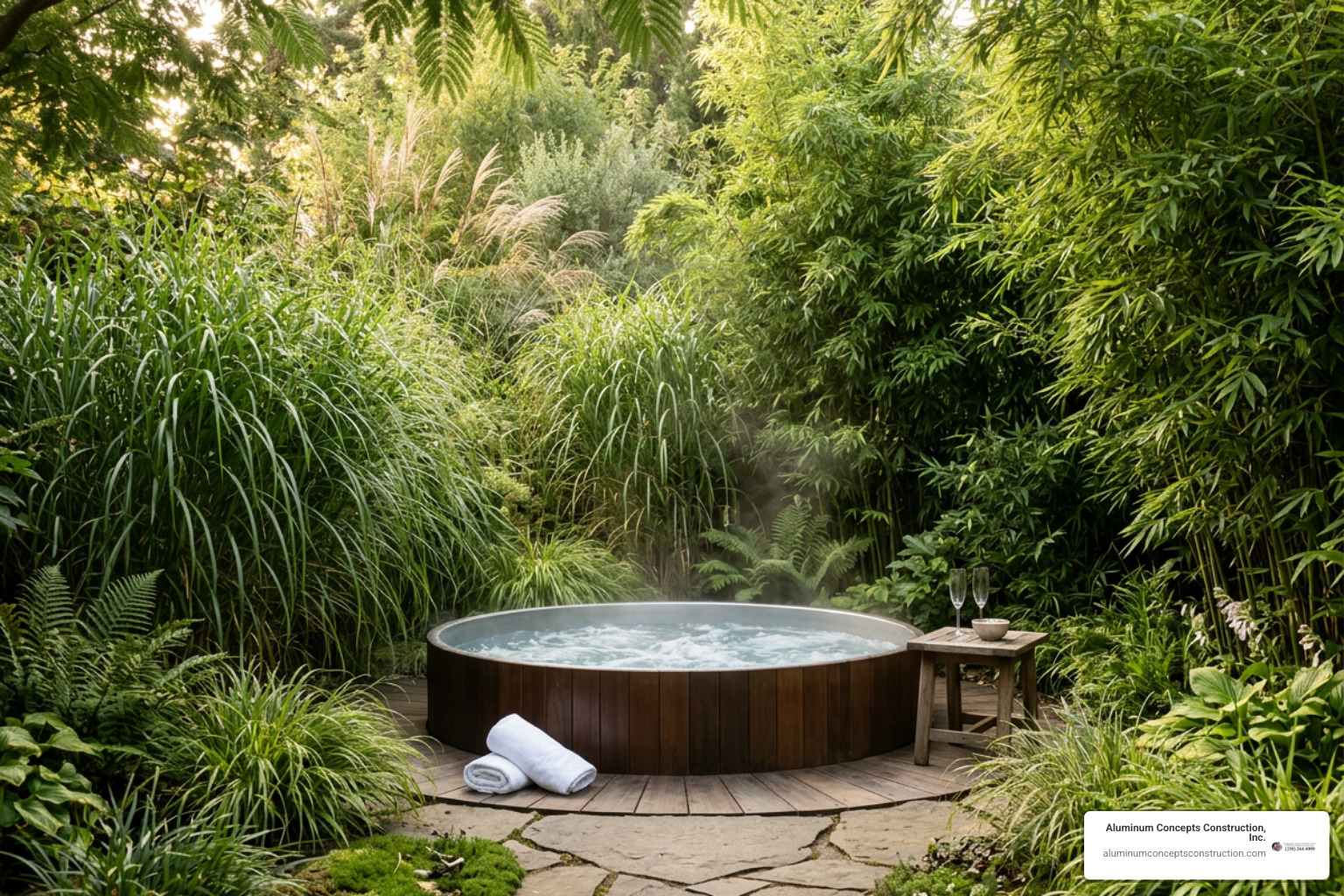
Using natural foliage to enclose your hot tub creates an organic, spa-like sanctuary. Living barriers soften hardscape edges, absorb sound, and allow you to build an airy, light-filled green screen around your patio.
Tall Grasses and Bamboo Screens
Planting tall ornamental grasses or dense evergreen bamboo offers quick, lush coverage around spa edges. Wispy ornamental grasses sway gently in wind, providing visual privacy alongside calming ambient noise that drowns out neighboring street noise.
For fast-growing height, clumping bamboo species (avoid running varieties unless planted in sturdy containers) can produce a 10-to-15-foot dense screen within a couple of seasons. If your hot tub sits on a paved concrete slab or raised wooden deck, giant potted palms, Italian cypress, or large planters filled with tall grasses yield flexible, portable privacy that can be reconfigured whenever needed.
Trellises and Artificial Ivy Panels
Using vertical garden trellises with climbing flowering vines—such as jasmine, bougainvillea, or passionflower—creates a vibrant screen that fills your soaking area with natural fragrance. Trellises give you full control over height and density while keeping structural footprints tiny.
If you need immediate privacy without waiting for living vines to grow, artificial hedge grass walls and faux ivy fence panels are an affordable alternative. Over 700 artificial ivy screens are bought every month by homeowners looking for instant green walls. Weather-resistant synthetic ivy panels snap onto existing chain-link fences, wooden lattice, or simple metal frames to deliver zero-maintenance visual blockages year-round.
Strategic Tub Placement and HOA Compliance
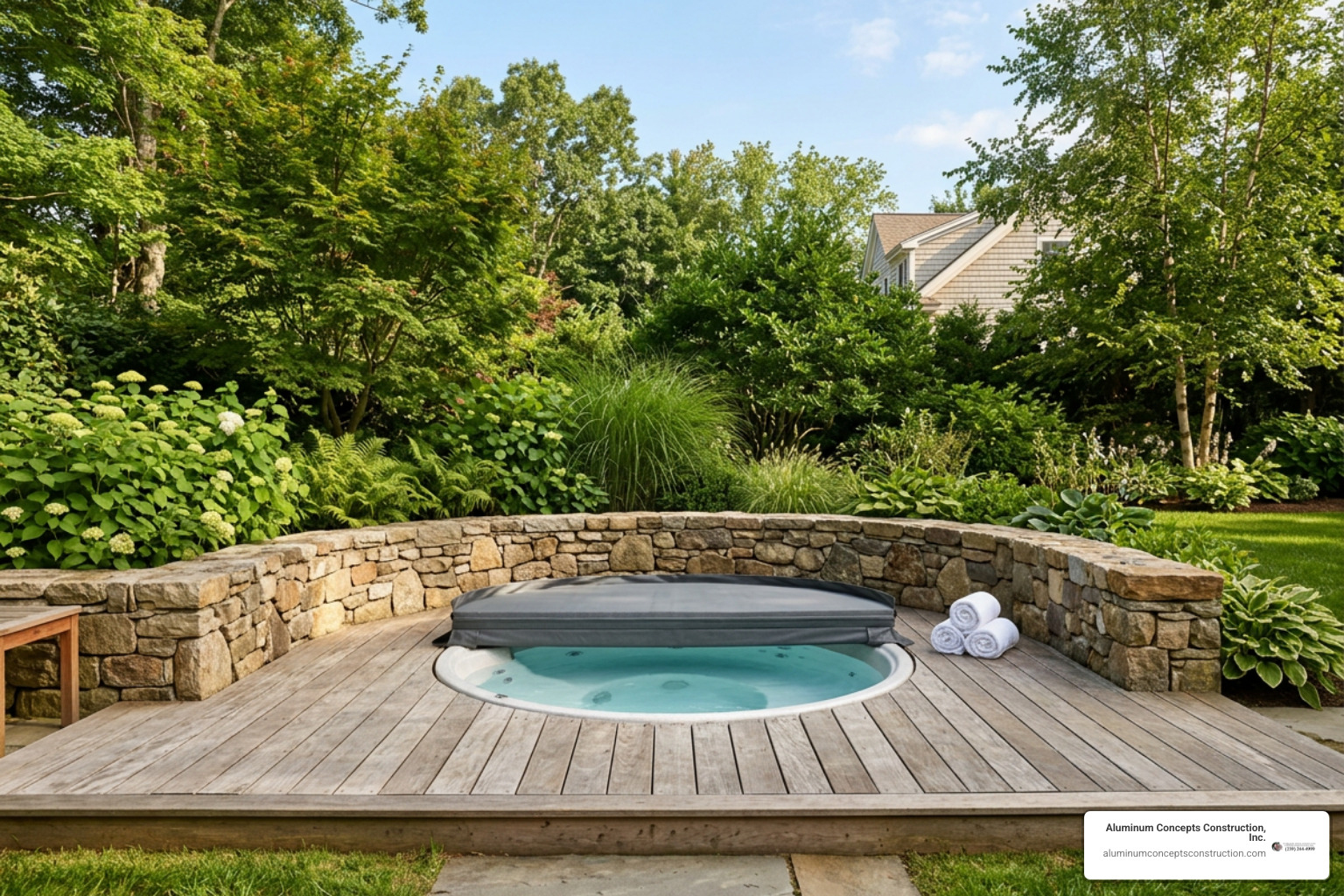
Adding a privacy screen isn’t always about installing high physical walls. By thoughtfully positioning your tub during initial site planning, you can utilize existing structures to maximize seclusion effortlessly.
Maximizing Privacy Through Smart Positioning
Placing your hot tub directly against an existing exterior wall of your home, garage, or stone patio feature instantly eliminates the need for screening on one or two full sides. Lowering your hot tub into a sunken deck or placing it in a natural grade depression drops the sightline of bathers below the top level of standard yard fencing.
Setting up a secluded corner nook by nestling your hot tub into the corner of your L-shaped patio or adjacent to tall boundary hedges minimizes the number of added screen panels required to achieve full coverage.
Local Building Codes and HOA Guidelines
Before sinking posts or erecting permanent architectural structures around your hot tub, verify local municipal zoning ordinances and neighborhood homeowners association covenants. Most homeowners associations enforce strict rules regarding maximum fence and screen wall heights (frequently capped at 6 feet), approved exterior screen colors, and mandatory setback distances from property boundary lines.
In coastal and hurricane-prone environments like Fort Myers, permanent structural screens and enclosed gazebos must comply with strict local building codes for wind resistance. When putting up large enclosures, ensure structural plans use properly engineered aluminum frames anchored to concrete footings. To safeguard your investment against extreme weather conditions, review practical techniques to Hurricane Proof Your Screened Enclosure before finalizing installation.
Frequently Asked Questions About Hot Tub Privacy
How do I maintain privacy around my hot tub without feeling boxed in?
To keep your hot tub space airy and open, select semi-open screening materials rather than solid concrete or wood walls. Horizontal slatted wood or aluminum panels with 1-inch gaps, translucent frosted polycarbonate sheets, and light-filtering retractable mesh screens block direct sightlines while letting breezes and daylight pass through freely.
What materials work best for hot tub screens in high-humidity areas?
In high-humidity or coastal environments, powder-coated aluminum, synthetic composites, and rot-resistant woods like cedar or teak offer superior longevity. Powder-coated aluminum is particularly effective because it will not rust, warp, swell, or peel under constant moisture, high humidity, or intense salt-air exposure.
Do I need a permit or HOA approval for a privacy screen?
Temporary or freestanding privacy screens (such as potted plant barriers or movable louvered panels) rarely require permits. However, permanent structures—like custom screen rooms, wooden pergolas anchored to footings, or solid privacy fences over 6 feet tall—almost always require local building permits and approval from your HOA design review board.
Conclusion
Creating a private backyard spa doesn’t require isolating yourself behind imposing, dark walls. By combining architectural options like open pergolas or custom screen enclosures with smart materials, living barriers, and strategic tub placement, you can craft a private spa retreat tailored to your yard’s footprint and budget.
When you’re ready to enhance your home with high-quality, long-lasting custom outdoor structures, turn to our expert team at Aluminum Concepts Construction, Inc. We specialize in custom aluminum enclosures, screen rooms, and pool cages engineered to handle local building codes and coastal weather across Fort Myers, Cape Coral, Bonita Springs, Sanibel, and surrounding communities. Explore our specialized Screening Services today to start building your ultimate backyard retreat!
Comments are Disabled