
Uncage Your Budget: Everything You Need to Know About Pool Cage Pricing
What Is the Cost of a Pool Cage in 2026?
The cost of a pool cage typically falls between $7,051 and $18,831 for installation, though the final price can range far wider based on size, height, materials, engineering, and site conditions. A simple screened enclosure costs much less than a large, custom aluminum structure with upgraded screens, doors, or storm-rated framing.
| Pool cage option | Typical price |
|---|---|
| Basic screen enclosure | $8-$15 per square foot |
| Low-profile enclosure | $24-$75 per square foot |
| Polycarbonate enclosure | $20-$200 per square foot |
| Glass enclosure | $30-$75 per square foot |
| DIY kit | $600-$15,000 |
| Custom-built enclosure | $20,000-$200,000 |
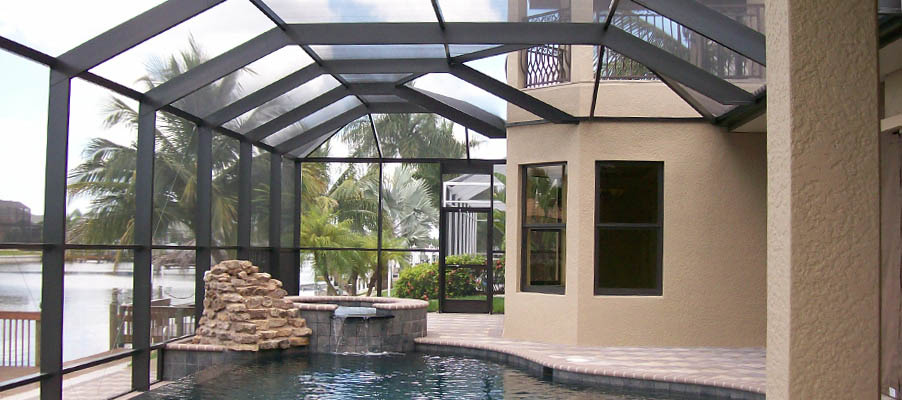
For Fort Myers and Cape Coral homeowners, the quote should account for more than the pool’s footprint. Aluminum frame strength, wind-load engineering, screen type, roof shape, doors, permits, and whether the cage attaches to the home can all change the total. A well-planned enclosure can keep out insects and debris, add shade, and make the pool deck easier to enjoy throughout the year.
I’m Sherman Walker, owner of Aluminum Concepts Construction, Inc., with nearly 25 years in residential aluminum construction in Southwest Florida. In the sections ahead, I’ll break down the cost of a pool cage so you can see what drives pricing and plan a durable enclosure for your home.
Average Cost of a Pool Cage and Key Price Factors
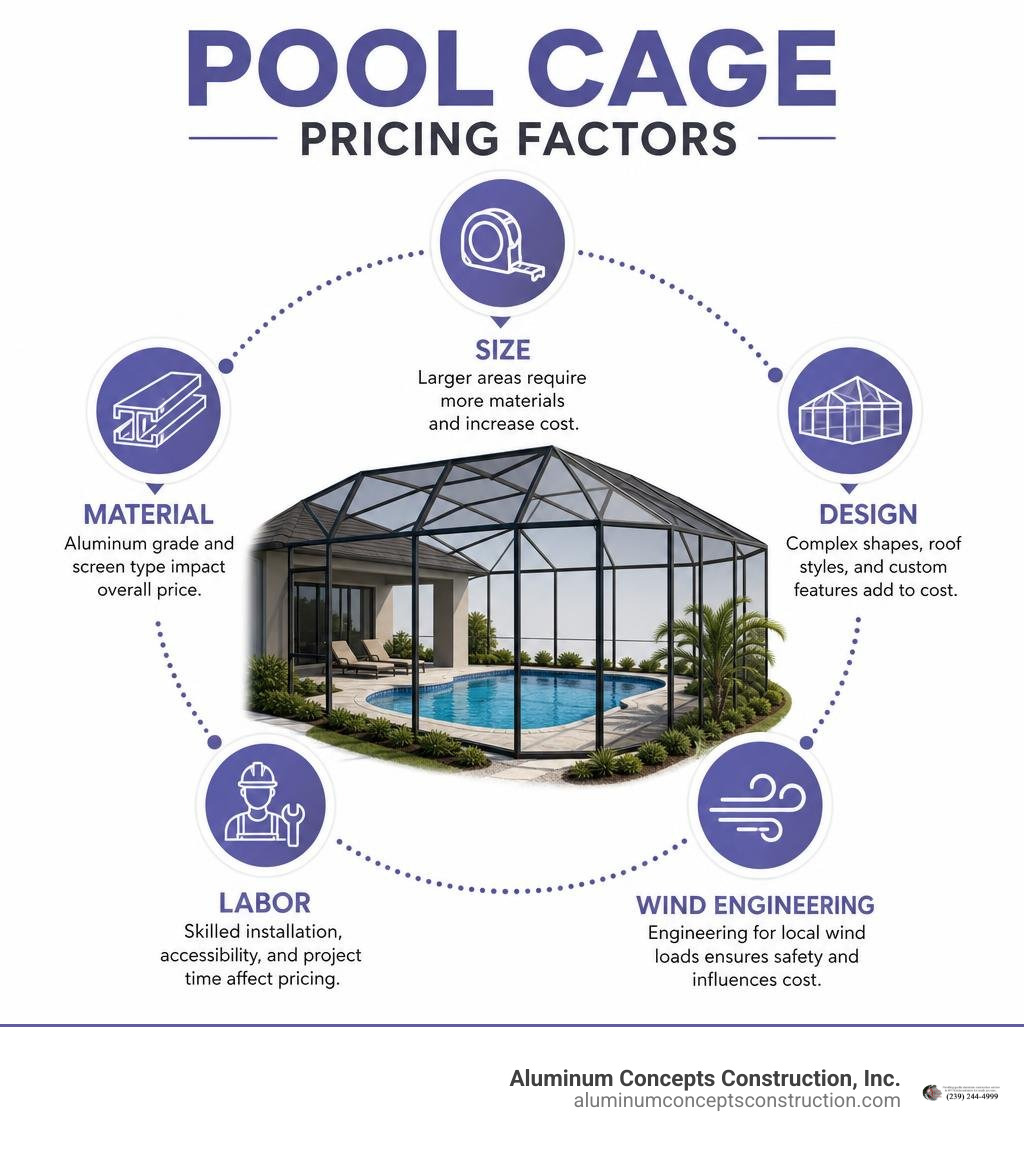
When evaluating the overall cost of a pool cage, understanding the foundational pricing variables helps prevent unexpected expenses during planning. While national averages hover between $7,051 and $18,831, local conditions across Fort Myers, Bonita Springs, and Sanibel mean every custom structure must be calculated based on site dimensions, deck layout, and structural specifications.
The ultimate price tag is determined by several core factors: overall square footage, structure height, framing gauge, wall height, roof profile, material selection, and accessibility. A compact enclosure around a modest pool requires significantly fewer aluminum extrusion beams and screen rolls than an expansive cage covering a resort-style pool, outdoor kitchen, and extended lanai deck.
| Enclosure Profile / Height Level | Cost per Square Foot | Description & Usage |
|---|---|---|
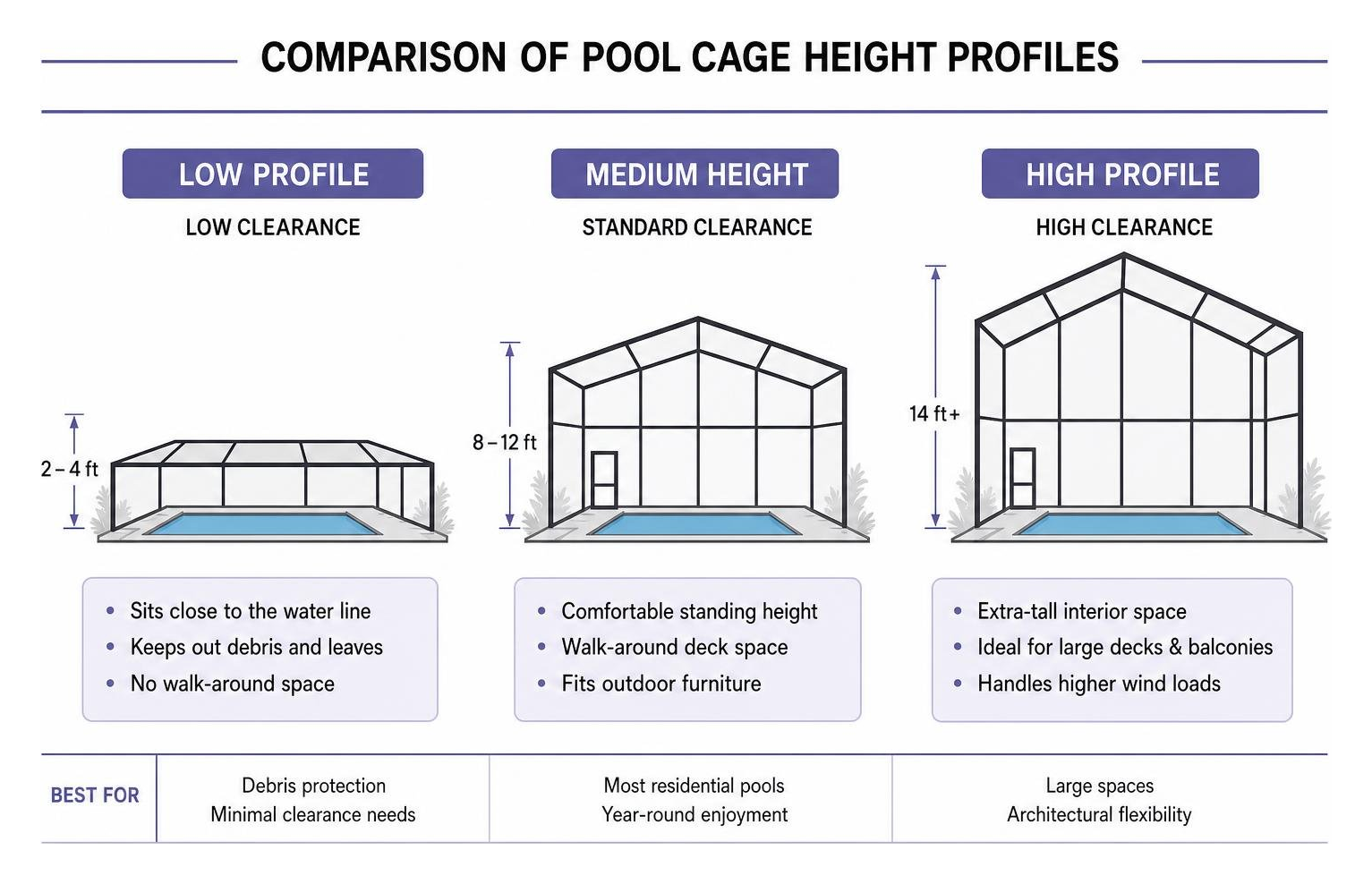
| Low-Profile Enclosure | $24 – $75 | Telescopic or low-clearance covers designed primarily to keep debris out while sitting close to the water line. |
| Medium-Height Enclosure | $8 – $100 | Standard standing-height enclosures (8 to 10 feet clear) allowing comfortable walking room on the deck. |
| High-Clearance Enclosure | $15 – $200 | Multi-story or mansard structures covering large decks, balconies, or second-story entryways. |
Height and Square Footage Ranges
Height plays a massive role in structural design and pricing. Low-profile enclosures range from $24 to $75 per square foot. These low-clearance options sit just above the water level, effectively functioning as hard covers or low-profile domes. While they excel at preventing chemical evaporation and blocking leaf litter, they do not provide walk-around outdoor living space on the deck.
Medium-height enclosures are the standard across Southwest Florida, running from $8 to $100 per square foot depending on panel materials. These offer generous head clearance—typically 8 to 12 feet high—allowing homeowners to comfortably place lounge chairs, tables, and outdoor amenities inside the cage.
High-profile or multi-level enclosures cost between $15 and $200 per square foot. These impressive structures span two stories or feature exaggerated roof peaks to accommodate upper-deck balconies, high structural spans, or custom architectural features. Because high enclosures catch more wind pressure during storm events, they require thicker aluminum members, heavier vertical posts, and reinforced diagonal bracing, driving both material and installation costs upward.
Freestanding vs. Attached Structures
Another strategic decision is whether to build an attached structure or a standalone freestanding enclosure.
A freestanding pool cage built directly over a pool deck surrounded by lawn or pavers costs between $5,000 and $20,000. These standalone frames require independent perimeter footings, continuous anchor points, and specialized gutter setups on all four sides to manage rainwater run-off effectively.
In contrast, attached pool cages cost between $5,000 and $50,000, depending on the scale and complexity of the residential integration. Attached cages tie directly into your home’s existing fascia or roof overhang, creating a seamless indoor-outdoor transition between your living space and the pool deck. Integrating the cage directly into the home requires careful flashing, specialized structural attachment lines, and high-performance gutters. For homeowners interested in integrating their cage with solid patio additions, reviewing specialized Fort Myers Screened Rooms provides valuable design context. You can also explore local discussions regarding custom construction projects in What is the cost of building a pool and cage in Cape Coral? .
Material Options, Door Types, and Installation Labor
The selection of wall and roof panel materials directly shapes the initial quote, long-term durability, and ongoing maintenance requirements. The framing itself relies on engineered aluminum extrusions designed to resist humidity and salt spray, but the material filling those spans determines light transmission, airflow, and storm resistance.
Screen Mesh, Polycarbonate, and Glass Panels
The three primary infill materials utilized in modern enclosures include traditional screen mesh, solid polycarbonate panels, and structural tempered glass:
- Screen Mesh ($8 to $15 per square foot installed): High-grade fiberglass or coated polyester screen remains the most popular option across Fort Myers Beach and Pine Island. It offers maximal ventilation, natural sunlight, bug protection, and cost-efficiency. Specialty mesh options—such as pet-resistant screen or fine-mesh bug screens—cost slightly more but provide enhanced resistance against pet claws and tiny midges (no-see-ums).
- Florida Glass (Privacy Screen): A specialized screen product consisting of standard fiberglass mesh laminated with a clear vinyl coating. It prevents water infiltration and blocks outside views along lower wall panels, offering excellent splash protection and privacy along property lines.
- Polycarbonate Panels ($20 to $200 per square foot): Multi-wall or solid polycarbonate sheets offer structural impact resistance and complete water barriers. Polycarbonate is frequently chosen for retractable roofs or dedicated shade sections over dining areas.
- Glass Enclosures ($30 to $75 per square foot): Safety tempered glass panels turn a simple pool cage into a fully enclosed, year-round sunroom or glass house. While offering pristine views and weatherproofing, glass requires structural aluminum support systems that increase structural engineering demands.
Door Styles and Access Points
Access doors are essential for safety, pool maintenance, lawn equipment entry, and pet movement. The style and construction of your enclosure doors impact both safety compliance and overall project costs:
- Standard Screen Doors ($50 to $500 per door): Lightweight aluminum frame doors wrapped in matching screen mesh, fitted with self-closing hinges and bug sweeps to satisfy local pool safety codes.
- Storm and Heavy-Duty Doors ($100 to $1,000 per door): Reinforced, insulated, or glass-paneled access doors engineered to handle extreme wind pressure and provide secure entry to attached patio structures.
- Doggy and Pet Doors ($150 to $500 per door): Heavy-duty, flap-style pet doors integrated directly into lower aluminum kick-plates or screen frames, allowing pets safe access without tearing screen material.
If you are planning decorative front entryways or specialized screened access points alongside your pool enclosure, taking a look at custom designs like Fort Myers Screening Entry can inspire seamless curb-appeal concepts.
Labor Costs and Material-Based Differences
Labor charges form a significant portion of the total cost of a pool cage. Professional aluminum mechanics and certified installers charge varying rates based on the material type and physical hazards involved:
- Screen and Polycarbonate Enclosure Labor: Averages approximately $35 per hour per installer. Standard screen rolls and lightweight aluminum members assemble efficiently, keeping field hours manageable.
- Glass and Custom Heavy Architectural Labor: Averages approximately $50 per hour per installer. Glass panels require specialized lifting equipment, glazing hardware, precise leveling, and heavier structural footings.
Because Southwest Florida coastal conditions demand precise anchoring into concrete footings using corrosion-resistant fasteners, professional fabrication and expert site measurement ensure the framing remains square and structural integrity is maintained for decades.
Design Variations and Structural Engineering Requirements
Roof shape and architectural geometry do more than alter the appearance of your backyard; they alter structural engineering dynamics, wind distribution, and construction complexity.
How Design Styles Impact the Overall Cost of a Pool Cage
Choosing a specific roof style lets you customize head clearance and aesthetic appeal, but it also alters overall pricing:
- Domed Pool Enclosures: Average around $1,200 total (ranging from $870 to $1,500) for standard small dome top covers, though full-scale custom domed pool cages scale upward with size. The rounded frame sheds wind effectively and distributes aerodynamic uplift forces, making it popular in hurricane-prone zones.
- Lean-To Pool Enclosures ($5,000 to $20,000): A clean, single-sloped roof design that slants downward away from an existing house wall or roofline. Lean-to designs are structurally straightforward, efficient to construct, and ideal for standard backyard footprints.
- Mansard and Gable Roof Enclosures ($10,000 to $35,000+): Mansard roofs feature flat center ceilings with sloped sides, creating an airy, spacious indoor feel over the entire pool deck. Gable roofs feature classic high-peaked “A-frame” centerlines that align with traditional home architecture.
- Retractable Pool Enclosures ($70,000 to $140,000): For the ultimate flexible outdoor experience, commercial-grade retractable systems average $70,000 for a typical 700-square-foot footprint. Premium motorized systems featuring heavy-gauge track extrusions and polycarbonate panels allow homeowners to open up the pool area in clear weather and seal it completely when rain strikes.
Weather Resistance and Engineering Additions
In regions subject to severe weather, high-velocity winds, and extreme atmospheric pressure changes, structural integrity cannot be compromised. Building codes in North Fort Myers, Cape Coral, and surrounding islands require engineering that withstands continuous tropical storms and major wind events.
Engineering additions, heavy-duty wall uprights, diagonal bracing cables, and upgraded tie-downs add roughly 10% to the base structural cost. However, this investment ensures the cage remains securely anchored during storms. Key structural upgrades include:
- Thicker architectural extrusions (upgrading from standard 2×3-inch or 2×4-inch members to heavy-duty 2×6, 2×8, or 2×10-inch aluminum super-beams).
- 316-grade stainless steel structural fasteners and ceramic-coated tapcon concrete screws to prevent galvanic corrosion and premature failure.
- Heavy-gauge gusset plates, wind-brace cables, and engineered concrete footings.
To learn more about strengthening your structure against high winds, read our detailed guide on how to Hurricane Proof Your Screened Enclosure.
Kits vs. Custom Builds, Building Permits, and Contractor Selection
Homeowners considering a pool enclosure project usually evaluate two main routes: purchasing a pre-fabricated DIY enclosure kit or commissioning a fully custom-built enclosure installed by a licensed contractor.
Upgrading Add-Ons to Estimate the Final Cost of a Pool Cage
When building out your total project budget, accounting for optional secondary features ensures your final project cost matches your expectations. Common accessories include:
- Integrated Deck and Perimeter Lighting: Low-voltage LED lighting installed within aluminum tracks costs roughly $625 per primary fixture zone, transforming the pool deck for evening enjoyment.
- Child Safety Pool Fencing: Adding a secondary interior safety fence with self-latching gates inside the screen cage costs between $15 and $25 per linear foot.
- HVAC Integration & Dehumidification: For solid glass or fully enclosed polycarbonate structures, dedicated mini-split climate control systems add $2,000 to $6,000.
- Custom Landscaping & Paver Edging: Re-routing irrigation lines, clearing perimeter foliage, or installing paver borders along footings typically adds $1,000 to $4,000.
DIY Enclosure Kits vs. Custom Professional Installation
Prefabricated pool enclosure kits range from $600 to $15,000 for basic off-the-shelf materials. While the lower price point appears attractive, attempting a DIY installation carries significant risks:
- Alignment and Misalignment Risks: Aluminum framing requires precise leveling across long spans. Minor measurement errors on concrete slabs cause structural warping, binding doors, sagging roof beams, and panel gaps.
- Structural Failures: DIY kits rarely comply with strict regional wind load engineering codes in coastal Florida. Without engineered wind load calculations and heavy concrete footings, light kits risk collapsing under moderate storm stress.
- Equipment and Safety Hazards: Handling large aluminum purlins, purlin clips, high ladders, and tensioning screening mesh demands specialized skills and tools.
Custom-built pool enclosures range from $20,000 to $200,000 for comprehensive, highly engineered, professionally installed structures. A custom build ensures every angle perfectly matches your home’s rooflines, deck elevations, and architectural style.
Building Permits and Contractor Licensing
Installing an outdoor aluminum structure requires navigating strict municipal building codes, setback rules, right-of-way easements, and local HOA design guidelines across Sanibel, Bonita Springs, and Cape Coral.
Permits verify that structural engineering calculations, wind resistance ratings, anchor bolt spacing, and pool safety barrier rules are satisfied. Attempting unpermitted work can lead to municipal fines, stop-work orders, forced demolition, or voided homeowner insurance policies.
Partnering with a licensed and insured specialty contractor guarantees that engineering drawings are filed correctly, site inspections are passed, and work meets Florida Building Code standards. Always confirm credentials before signing contracts; review Be Sure to Hire a Licensed Contractor for All of Your Aluminum Construction Needs for essential vetting steps.
Lifespan, Maintenance, and Property Value Benefits
A high-quality aluminum pool cage is a valuable home improvement investment that protects your pool infrastructure, cuts routine deck maintenance, and elevates outdoor living comfort.
Enclosure Lifespan and Essential Maintenance
Under normal conditions, a well-built screen pool cage lasts 10 to 15 years before needing comprehensive rescreening or structural maintenance. The structural aluminum framing itself regularly lasts 30+ years with proper care.
To maximize lifespan, follow a regular cleaning routine:
- Bi-Annual Cleaning: Wash screen mesh and aluminum framing every six months to clear away pollen, salt residue, dirt, and organic algae growth.
- Gentle Cleaning Solution: Mix white vinegar and warm water (or a mild biodegradable dish soap solution) in a spray bottle or soft applicator tank. Gently scrub screens with a soft-bristle vehicle brush and rinse thoroughly with a low-pressure garden hose.
- Avoid High-Pressure Power Washing: Never spray screens with a high-psi pressure washer tip at close range, as intense water pressure can cut screening strands, rupture splines, and compromise panel tension.
When individual panels become loose or screen material degrades over time, professional restoration can refresh your structure without requiring a full tear-down. Discover repair and restoration solutions in our dedicated guide to Fort Myers Pool Rescreening.
Property Value, Shade, and Chemical Savings
Installing a custom pool cage yields several financial and practical daily benefits:
- Chemical Evaporation Savings: Direct sunlight and open airflow quickly break down chlorine and evaporate pool water. Covering your pool can reduce chemical consumption by up to 60%, saving hundreds of dollars annually in water and treatment supplies.
- Debris and Pest Barrier: Cages block leaves, palm fronds, frogs, snakes, and biting insects like mosquitoes and no-see-ums, reducing daily vacuuming and extending pool pump filter lifespans.
- UV Protection and Temperature Moderation: Screen panels diffuse direct sunlight, offering built-in UV protection that helps keep pool deck surface temperatures cooler on hot summer days.
- Resale Value and Outdoor Living Appeal: In Southwest Florida, outdoor living spaces are central to home value. A well-maintained cage creates a usable outdoor room that appeals to homebuyers, delivering strong return on investment at resale.
Frequently Asked Questions About Pool Enclosures
What is the average lifespan of a pool cage?
A custom aluminum pool cage structure lasts between 10 to 15 years before requiring screen panel replacement (rescreening), while the structural aluminum framing lasts 30 years or more. Lifespan depends on coastal proximity, wind exposure, frame fastener quality, and routine washing to remove salt spray and organic debris.
How often should a screen pool enclosure be cleaned?
We recommend washing your pool enclosure every six months. Cleaning prevents green algae accumulation, mould spores, and salt deposit build-up. Use a mild white vinegar and water mixture or specialized soft-wash soap applied with a low-pressure hose and soft-bristle brush.
How much money can a pool cage save on pool chemicals?
A screen enclosure can reduce pool chemical consumption by up to 60%. By filtering harsh ultraviolet rays and reducing water evaporation, chlorine lasts substantially longer in the water. Furthermore, keeping organic matter out of the pool prevents algae blooms that consume pool chemicals.
Conclusion
Calculating the cost of a pool cage involves evaluating screen material, frame dimensions, door placements, wind load engineering, and structural layout. While initial installation investments generally span from $7,051 to $18,831 for common screen enclosures, custom engineered solutions provide unmatched protection against severe weather, reduce maintenance workloads, and deliver year-round outdoor enjoyment.
At Aluminum Concepts Construction, Inc., we bring nearly 25 years of local specialty experience to every project across Fort Myers, North Fort Myers, Fort Myers Beach, Cape Coral, Bonita Springs, Sanibel, and Pine Island. Our team designs and crafts engineered aluminum pool cages built to endure coastal elements and elevate your home’s outdoor living space.
Ready to uncage your pool deck’s potential? Explore Custom Pool Screening Services and contact our team today to schedule your personalized design consultation and project estimate.
Comments are Disabled