
Understanding Lanai Cage Replacement and Construction Costs
What Does a Lanai Cage Cost in Florida?
Lanai cage cost in Florida typically starts around $6,000 to $12,000 for a standard screened enclosure, though complete projects can range from $8,000 to $45,000 or more. A simple screen enclosure may price near $8 to $18 per square foot, while a larger, fully designed lanai project with roofing, upgraded screens, and custom features may run about $35 to $66 per square foot.
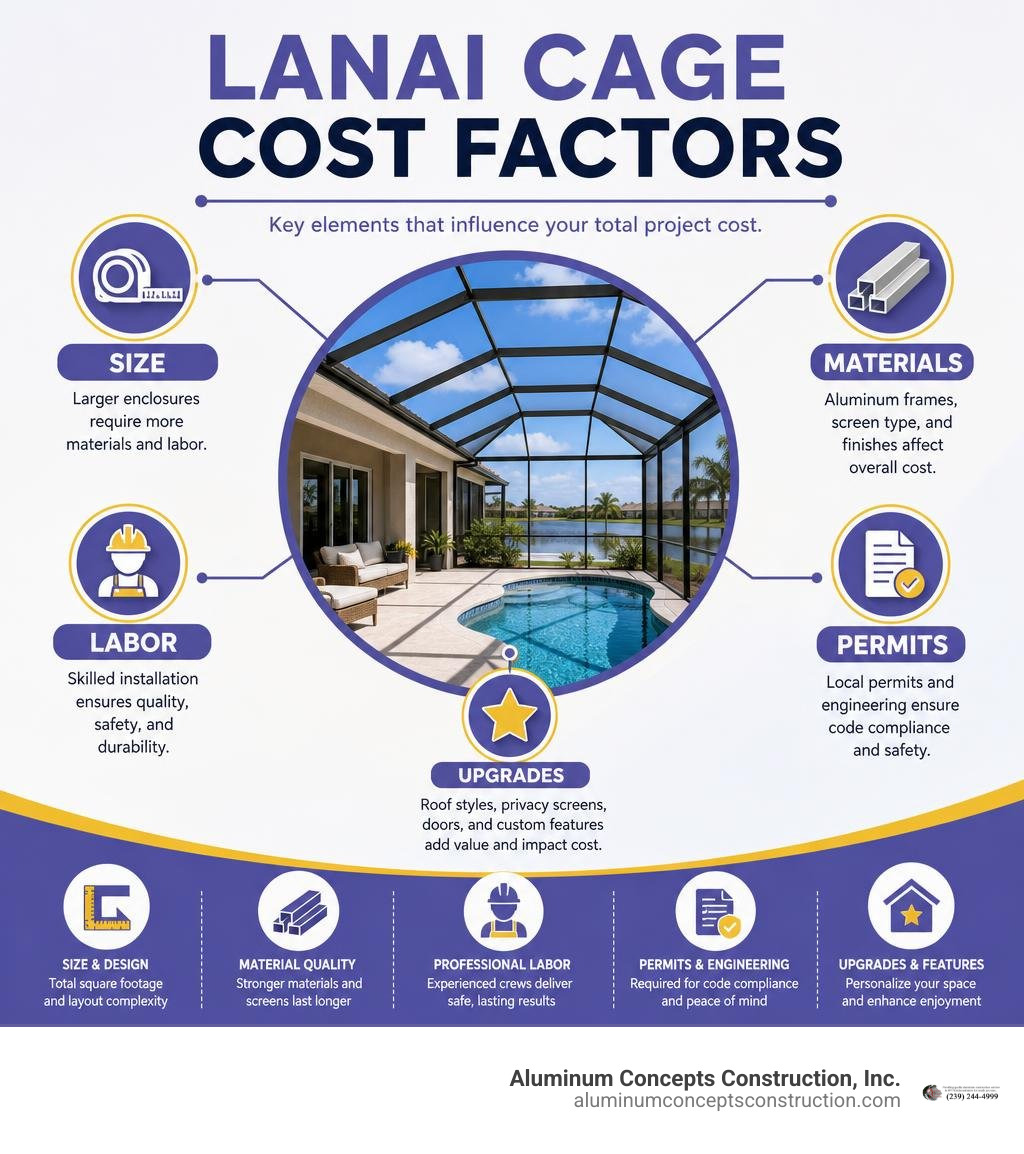
Your final price depends on the enclosure’s size, height, aluminum framing, screen type, roof design, site conditions, labor, engineering, and local permits. For Fort Myers and Cape Coral homeowners, wind-load requirements and hurricane-ready construction can also be major budget factors.
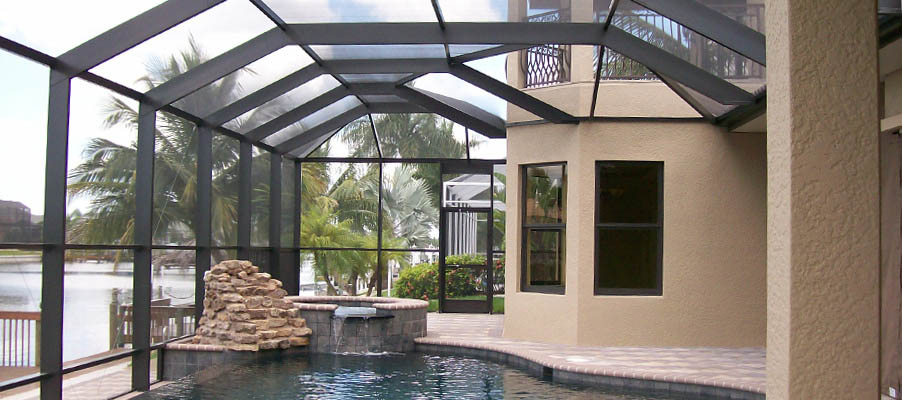
A lanai cage is an aluminum-framed screen enclosure built around a patio, pool, or outdoor living area. It helps keep out mosquitoes, no-see-ums, leaves, and other debris while letting homeowners enjoy Florida’s sun, airflow, and pool views.
I am Sherman Walker, owner of Aluminum Concepts Construction, Inc., with nearly 25 years in residential construction and aluminum outdoor structures in Southwest Florida. My experience with lanai cage cost includes helping homeowners evaluate durable screen enclosure options, replacement needs, and the factors that shape a realistic project budget.
Average Lanai Cage Cost in Florida
When planning an outdoor home improvement project in Southwest Florida, understanding the average lanai cage cost helps you establish a realistic budget long before the first aluminum beam arrives. Across local communities like Fort Myers, Cape Coral, Bonita Springs, and Sanibel, total costs span a broad spectrum based on whether you are building a simple patio screen enclosure or an elaborate, high-profile enclosure over a sprawling swimming pool deck.
On average, Florida homeowners pay between $6,000 and $12,000 for a standard residential lanai cage. If we evaluate the overall project on a per-square-foot basis, basic screen enclosures generally range from $8 to $18 per square foot for the enclosure framing and mesh. However, when factoring in comprehensive site preparation, structural footings, custom rooflines, and integrated decking, total project costs routinely span $35 to $66 per square foot.
To give you a clear picture of how options affect your total quote, we have broken down typical price tiers below:
| Project Tier | Price Range | Average Cost / Sq. Ft. | Key Features & Inclusions |
|---|---|---|---|
| Basic Entry-Level | $6,000 – $10,000 | $8 – $18 | Standard 2″x4″ aluminum frame, standard fiberglass mesh, flat or low-pitch roof, standard single door. |
| Mid-Range Standard | $10,000 – $15,000 | $18 – $35 | Heavy-duty powder-coated frame, mansard or gable roof structure, Super Screen mesh upgrade, dual access doors. |
| High-End Custom | $15,000 – $45,000+ | $35 – $66+ | Mega-view picture windows, heavy wind-rated structural engineering, specialty no-see-um mesh, insulated roof panels, built-in lighting. |
For detailed breakdowns on national structural averages and how spatial layouts impact total price estimates, check out this comprehensive Lanais Cost Guide: Typical Price Ranges.
Key Factors Impacting Your Total Lanai Cage Cost
No two backyards in Southwest Florida are completely identical, which means pricing fluctuates based on several core variables:
- Footprint Size and Perimeter Length: A larger footprint requires significantly more aluminum framing members, fasteners, concrete anchors, and screen square footage.
- Structural Height and Volume: A standard 8-foot or 10-foot patio screen cage uses basic wall bracing. Extending heights to 14, 16, or 20 feet for multi-story lanais or high pool cages drastically increases material volume, scaffolding requirements, and wind-resistance engineering.
- Framing Materials and Finish: Heavy-gauge extruded aluminum member sizes (such as 2″x7″ or 2″x10″ beams for open panoramic views) cost more than standard 2″x4″ purlins. Additionally, bronze or custom dark powder-coat finishes carry a premium over basic white powder coating.
- Site Prep and Base Conditions: Building over an existing concrete slab with sound footings is straightforward. If our team needs to prep raw soil, pour new footings, level uneven ground, or alter existing pavers, installation costs increase accordingly.
Estimating Budget with a Lanai Cage Cost Calculator
Using a lanai cage cost calculator or interactive budget formula provides a solid starting point when exploring your back-patio options. To calculate an accurate rough estimate before requesting an on-site consultation, follow this straightforward process:
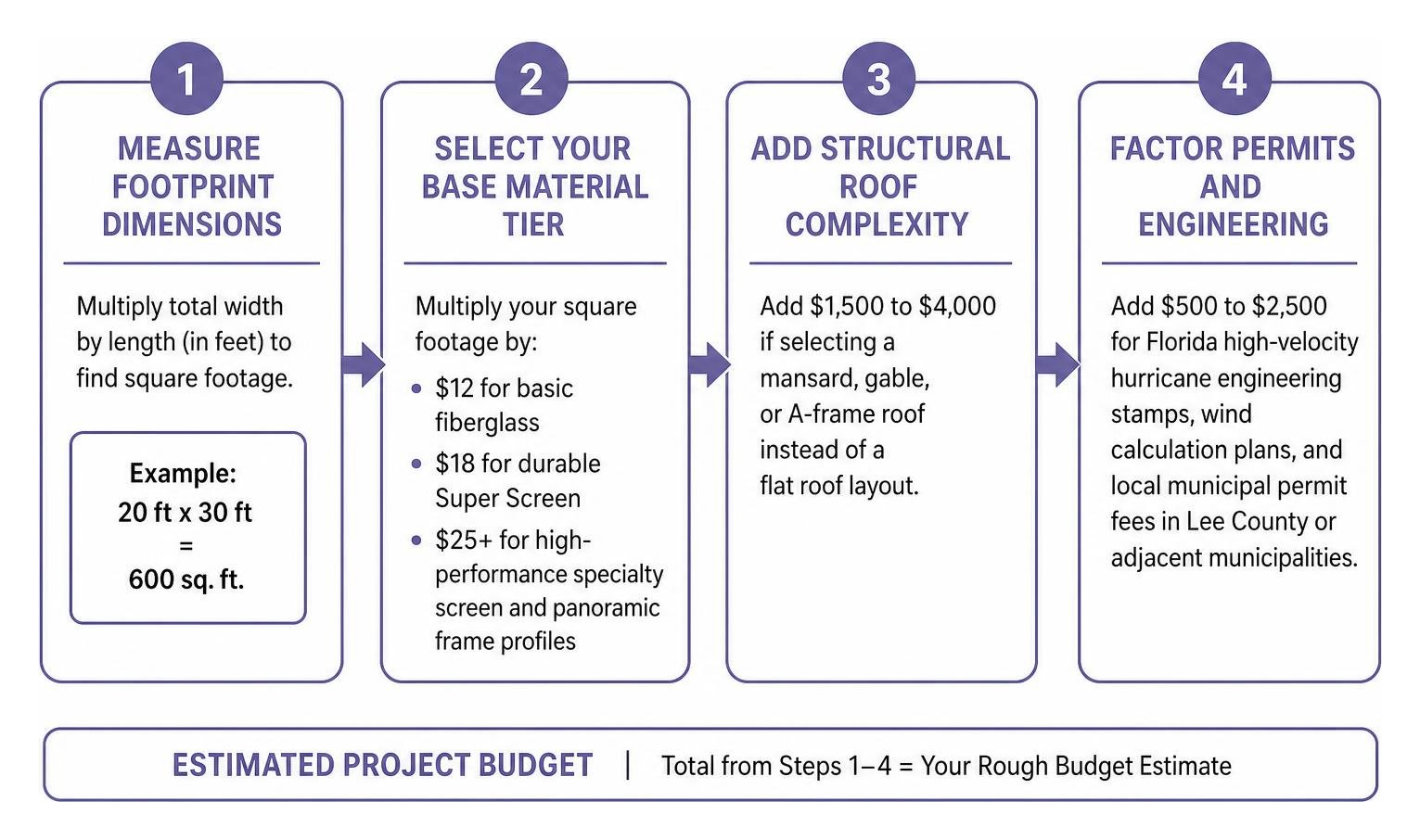
- Measure Footprint Dimensions: Multiply the total width by length (in feet) to determine your total square footage (e.g., 20 ft x 30 ft = 600 sq. ft.).
- Select Your Base Material Tier: Multiply your square footage by $12 for basic fiberglass, $18 for durable Super Screen, or $25+ for high-performance specialty screen and panoramic frame profiles.
- Add Structural Roof Complexity: Add $1,500 to $4,000 if selecting a mansard, gable, or A-frame roof instead of a flat roof layout.
- Factor Permits and Engineering: Add $500 to $2,500 for Florida high-velocity hurricane engineering stamps, wind calculation plans, and local municipal permit fees in Lee County or adjacent municipalities.
While a digital calculator helps outline expectations, consulting with experienced local specialists ensures every site-specific variable—such as setback lines, drainage angles, and existing roof connection points—is accurately captured.
Material and Screen Options Affecting Price
The selection of framing profiles and screen mesh materials forms the foundation of your investment. Because Southwest Florida weather presents intense sun exposure, salty coastal breezes, and seasonal tropical storms, investing in quality materials directly impacts how many years your structure will stand without needing significant repairs. Learn more about our custom structural designs by exploring our specialized Pool Cages section.
Roof Design and Framing Configurations
The shape of your lanai roof affects aesthetic appeal, water runoff management, internal ceiling height, and overall structural strength under severe wind conditions:
- Flat Roof: The simplest and most budget-friendly configuration. Works well for narrow patio extensions attached directly beneath an existing home overhang, though it requires precise sloping to prevent water pooling.
- Mansard Roof: Features sloped sides that rise to a flat top center panel. It remains the most popular choice across Fort Myers and Cape Coral due to its pleasing proportions, excellent wind dissipation, and generous open feeling.
- Gable (A-Frame) Roof: Characterized by two sloping sides meeting at a high center ridge line. A gable roof matches pitched house rooflines seamlessly, creating high ceilings and impressive open space, though it increases framing material costs by 15% to 25%.
- Dome Roof: Gently curves upward into a rounded peak. Dome configurations offer exceptional structural integrity against downward wind pressures while adding an architectural feature over large pool lanais.
Screen Mesh Types and Durability
The screen mesh you choose dictates pest protection, airflow, shade percentage, and replacement lifespans. Material options range widely in price and performance:
- Standard Fiberglass Mesh (18×14 weave): The standard industry baseline. It offers decent insect barrier properties and good visibility at the lowest price point, but typically degrades after 7 to 10 years of intense Florida sun exposure.
- Super Screen (Polyester Mesh): Engineered with advanced polyester core threads coated in protective PVC. Super Screen boasts up to three to four times the tear strength of fiberglass, easily resisting tree branch impacts and pet clawing while lasting 20 years or longer.
- No-See-Um Mesh (20×20 micro-weave): Features a tight weave specifically designed to block tiny biting midges and gnats common along coastal regions like Sanibel, Pine Island, and Fort Myers Beach. It slightly reduces air cross-ventilation but provides complete pest protection.
- Pet Screening: Heavy-duty vinyl-coated polyester designed specifically for lower enclosure panels where dogs or cats might scratch or push against the mesh.
- Solar Screening: Specialized dense weave that blocks 60% to 80% of incoming solar heat and UV rays, significantly cooling covered patio zones while providing daytime privacy.
Labor, Permits, and Florida Building Code Regulations

Constructing or replacing an outdoor screen structure in Southwest Florida is far more complex than simple frame assembly. It requires strict adherence to updated building codes designed to keep structures anchored safely during major severe weather events. You can explore full details on structural storm protection and wind codes by reading our guide on Hurricane Readiness.
Labor expenses for professional cage installation generally account for 30% to 45% of total project costs, ranging from $3,000 to $16,000 depending on project scale, site access, and structural height.
For real-world community discussions on local permit steps, site preparation, and budgeting experiences, review this local Cape Coral Pool Cage Discussion.
Permitting and Engineering Requirements
In Southwest Florida communities including Fort Myers, Cape Coral, Bonita Springs, and North Fort Myers, building codes mandate that every new aluminum lanai enclosure or structural replacement undergo formal plan reviews and permitting:
- Wind Load Standards: Structures must be engineered to withstand wind speeds ranging from 150 mph to 170+ mph depending on exact coastal proximity zones.
- Engineering Drawings: Site plans must feature wet-signed or digitally sealed engineering calculations from a registered Florida Professional Engineer (PE).
- Permit Fees: Building permits, plan review fees, and administrative processing typically cost between $200 and $4,000 depending on total project valuation and municipality jurisdiction.
- Site Inspections: Municipal building inspectors must verify continuous anchor placement, concrete footing depth, setbacks, and storm tie-downs at key milestones during installation.
Professional Labor Rates and Timeline
Professional screen enclosure installation crews typically consist of two to four specialized aluminum mechanics. Specialized trade rates generally range from $45 to $85 per hour per technician.
A standard mid-sized lanai cage project involves approximately 40 to 120 total labor hours. Here is a typical timeline breakdown for a residential project:
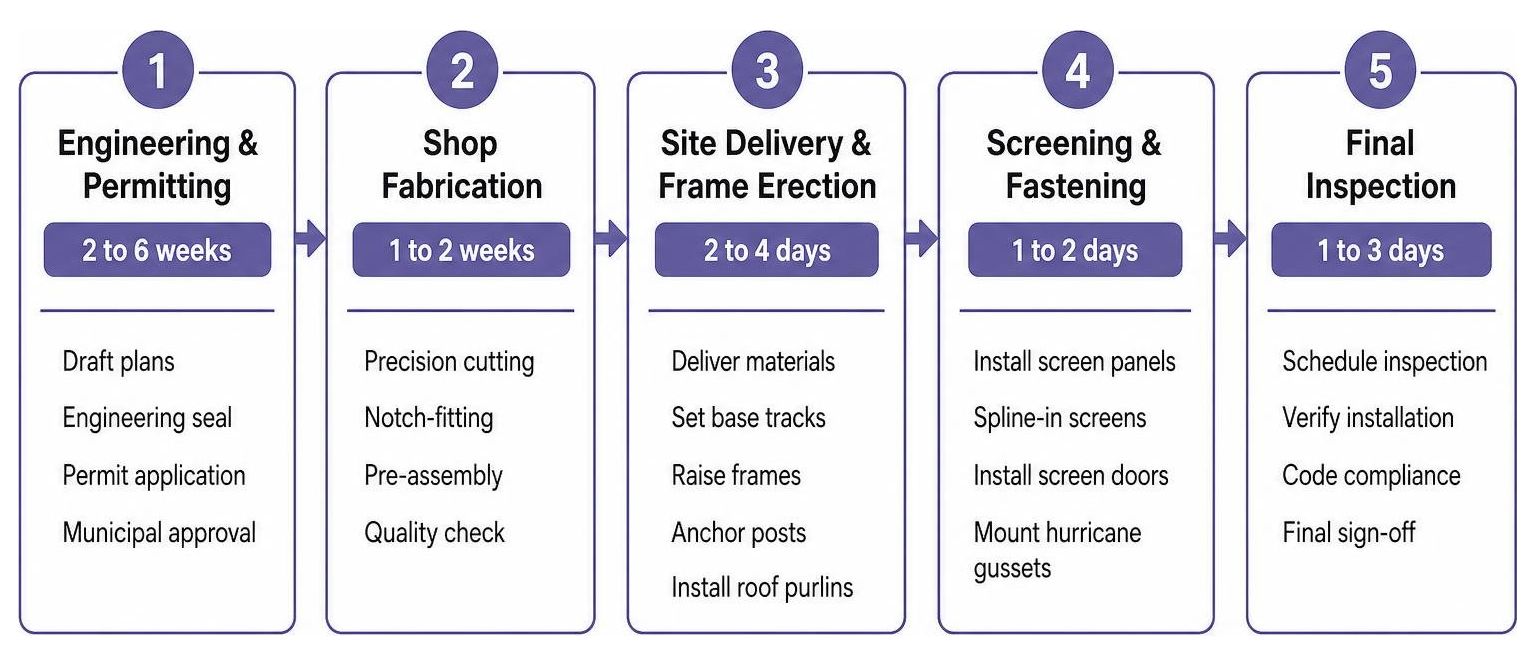
- Engineering & Permitting (2 to 6 weeks): Drafting plans, securing engineering seals, and awaiting municipal permit approval.
- Shop Fabrication (1 to 2 weeks): Precision cutting, notch-fitting, and pre-assembling aluminum beams in a controlled shop setting.
- Site Delivery & Frame Erection (2 to 4 days): Setting base tracks, raising wall frames, anchoring structural posts, and constructing roof purlins.
- Screening & Fastening (1 to 2 days): Splining screen panels tightly into place, installing screen doors, and mounting hurricane gussets.
- Final Inspection (1 to 3 days): Calling in city or county inspectors for final sign-off.
Ongoing Maintenance and Lanai Cage Rescreening
Even the most durable aluminum screen enclosure requires occasional care to maintain its appearance and structural safety over time. Factoring minor upkeep into your overall budget ensures your investment stays pristine for decades.
Over time, individual screen panels may tear due to airborne debris during summer storms, or rubber spline splices may dry out and loosen. When only a few wall sections are damaged, individual panel repairs cost between $60 and $150 per panel. However, if your screen mesh is over 10 to 12 years old, performing a complete rescreen is much more cost-effective than patching individual sections piecemeal.
Full rescreening projects typically cost between $1,500 and $4,500 depending on enclosure square footage, roof pitch height, and screen material upgrades. If you are noticing worn mesh or sagging panels on your enclosure, check out our specialized Fort Myers Pool Rescreening services for comprehensive renewal options.
To extend the physical life of your lanai cage, follow these basic maintenance recommendations:
- Annual Pressure Washing: Wash aluminum framing and mesh once or twice a year using low-pressure water and mild eco-friendly soap to remove salt spray, chalky oxidation, pollen, and green algae.
- Hardware Inspections: Inspect corner gussets, door hinges, latch hardware, and base anchor bolts annually. Replace rusted carbon steel fasteners with marine-grade stainless steel screws (Pro-Tect or nylon-headed fasteners) to prevent unsightly rust streaks down white or bronze powder coating.
- Clear Overhanging Branches: Keep oak, pine, and palm trees trimmed back at least 6 to 8 feet from enclosure rooflines to prevent mechanical rubbing and branch impact damage during summer gusts.
Frequently Asked Questions About Lanai Enclosures
How much does a lanai cage cost per square foot in Florida?
In Southwest Florida, basic screen enclosures generally run between $8 and $18 per square foot for framing and mesh materials alone. When taking into account full end-to-end site preparation, custom engineered roofs, insulated composite panel additions, and professional installation labor, comprehensive lanai projects average between $35 and $66 per square foot.
How long does a screen lanai cage typically last?
An extruded aluminum cage frame installed with proper powder coating can easily last 20 to 30 years or more in Florida’s climate. Standard fiberglass screen mesh generally lasts 7 to 10 years before sun exposure weakens the fibers, whereas premium polyester Super Screen regularly lasts 20 years or longer without degrading or tearing.
Are permits required to build or replace a lanai cage?
Yes, virtually all municipalities across Lee and Charlotte counties—including Fort Myers, Cape Coral, Bonita Springs, and Sanibel—require official building permits and sealed engineering plans before constructing a new lanai enclosure or replacing an existing structural aluminum cage frame. Permits ensure the enclosure complies with updated Florida Building Code wind-load regulations.
Conclusion
Determining your prospective lanai cage cost comes down to balancing your spatial goals, desired screen performance, and structural upgrades against your long-term budget. Whether you want to enclose a cozy concrete patio to keep pests away or build a soaring custom pool structure with panoramic views, investing in high-quality aluminum framing and wind-rated engineering delivers lasting comfort, added home equity, and pest-free outdoor relaxation.
At Aluminum Concepts Construction, Inc., we take pride in engineering custom aluminum structures tailored to the unique coastal conditions of Fort Myers, Cape Coral, Bonita Springs, Sanibel, and surrounding Southwest Florida communities. If you are ready to explore options for your home, explore our specialized Screen Enclosure Services to request your personalized project consultation today.
Comments are Disabled