


The Ins and Outs of Rescreening Service Options
Restore Airflow and Bug Protection With Rescreening Service
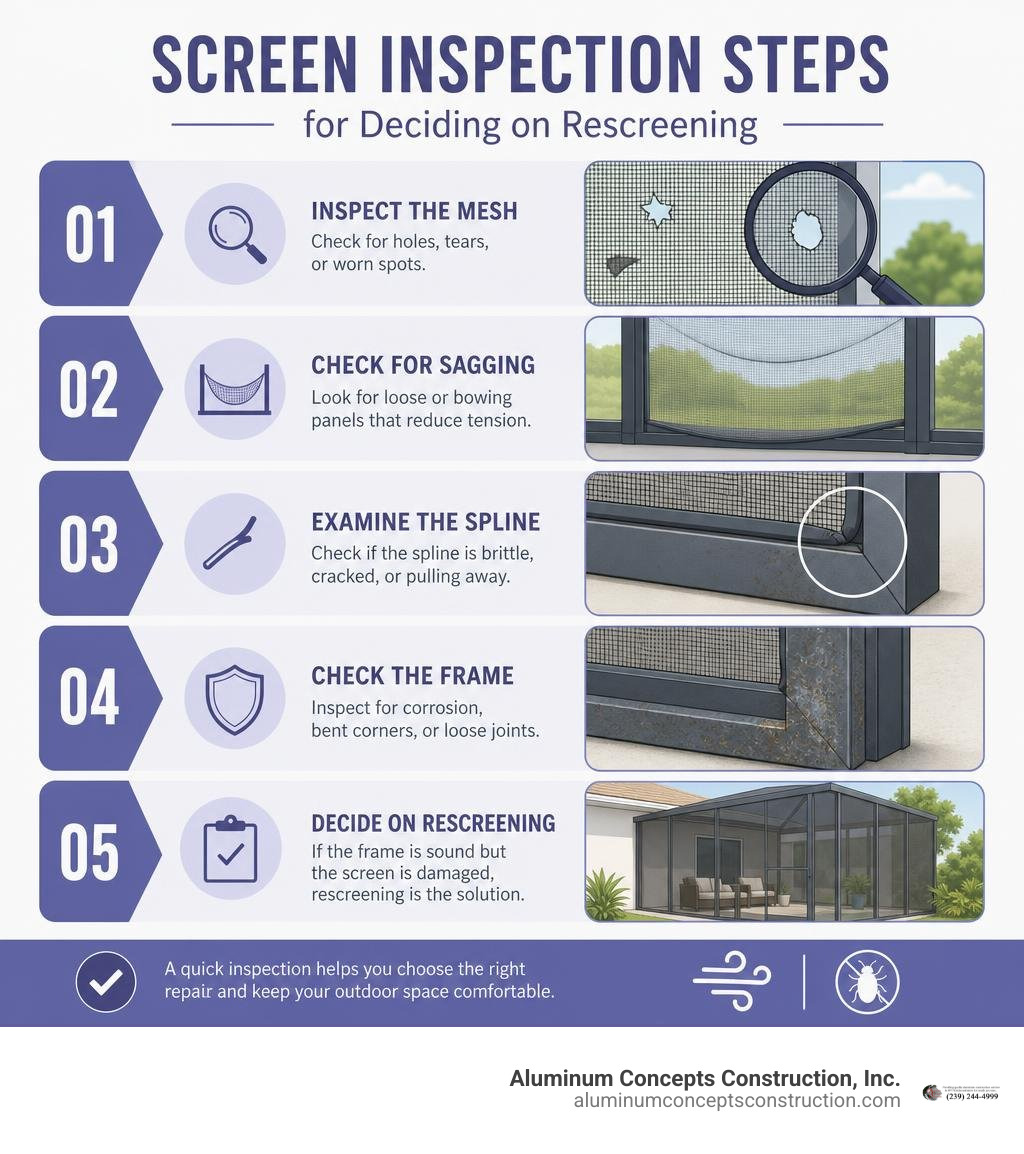
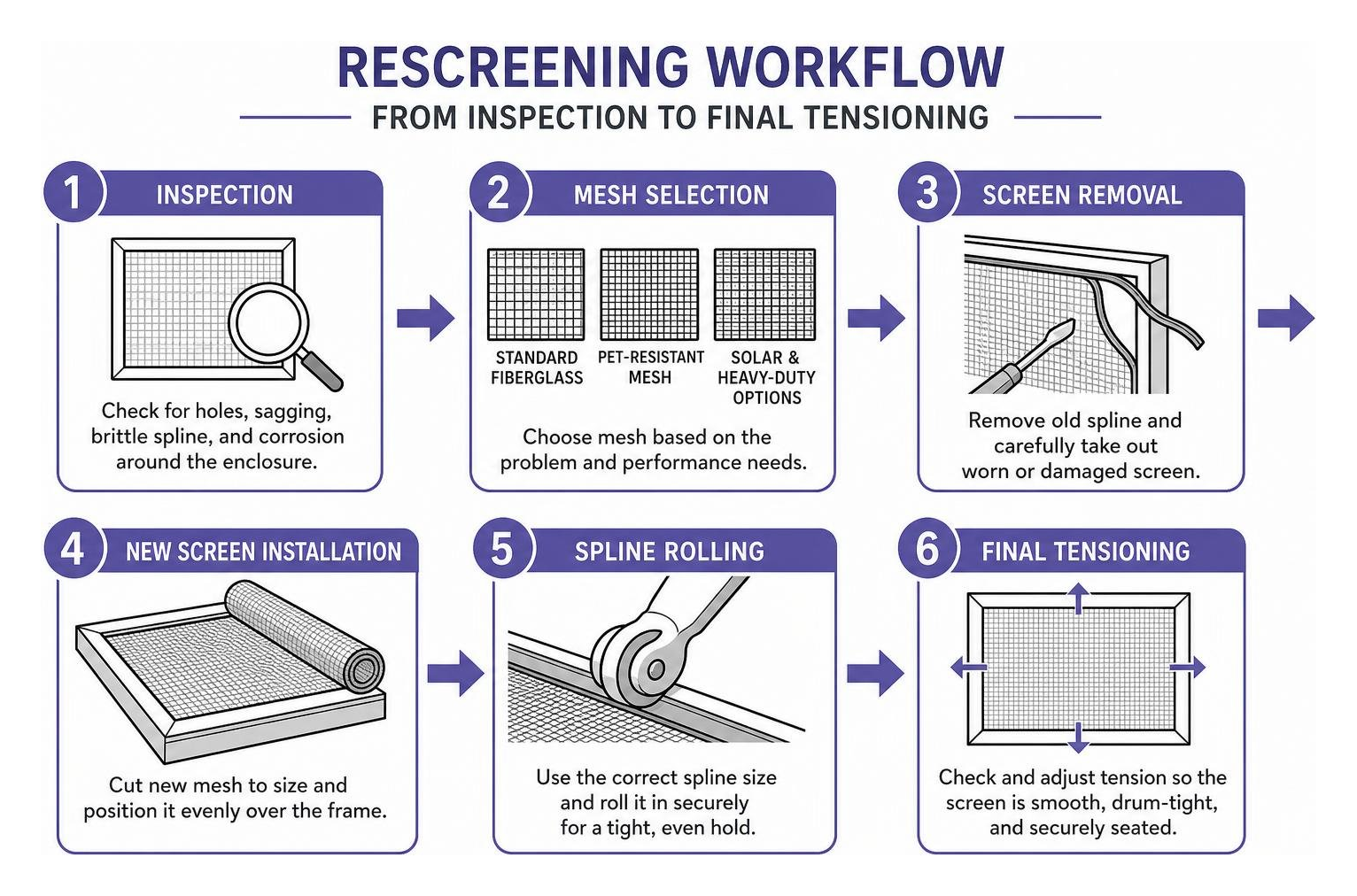
A rescreening service replaces worn, torn, loose, or sun-damaged mesh while keeping sound frames in place. For a Fort Myers or Cape Coral home, start by checking for holes, sagging panels, brittle spline, and corrosion around the enclosure. Then choose mesh based on the problem: standard fiberglass for an affordable refresh, pet-resistant mesh for claw damage, or solar and heavy-duty options for added comfort and strength.
Florida heat, UV exposure, storms, and daily use can weaken screens long before the aluminum structure needs replacement. Professional rescreening helps restore airflow and insect control without treating every damaged panel as a full enclosure rebuild.
I am Sherman Walker, owner of Aluminum Concepts Construction, Inc., with nearly 25 years in residential construction and home improvement, including aluminum outdoor structures and rescreening service solutions in Southwest Florida. Understanding the screen, frame, and local weather exposure helps homeowners choose repairs that last.
When and Why You Need a Professional Rescreening Service
Living across Southwest Florida—whether in Bonita Springs, Sanibel, or North Fort Myers—means outdoor living spaces are practically extra living rooms. However, our intense sub-tropical climate poses unique challenges. The relentless sun bakes screen fabric with ultraviolet radiation day after day, while summer thunderstorms bring high winds that whip debris across pool decks and lanais. Over time, screens degrade, lose tension, and pull away from their tracks.
When screens fail, your peaceful patio quickly turns into an open buffet for no-see-ums and mosquitoes, or an accidental sauna if you lose cross-ventilation. Aside from annoying insects, weathered screening reduces curb appeal and compromises the overall safety of your outdoor space.
Common culprits behind screen failure include:
- Intense UV Degradation: Sunshine oxidizes the protective coating on screen fibers, leaving them brittle, chalky, and prone to tearing with the slightest touch.
- Storm and Wind Damage: Strong gusts loosen rubber splines and stretch mesh beyond its elastic limit.
- Pet Damage: Excited dogs and climbing cats can shred standard screening in seconds.
- Brittle Retaining Splines: The rubber or vinyl spline holding the screen into the aluminum extrusion dries out, shrinks, and cracks, causing the screen to pull loose.
- Stray Impacts: Backyard games, falling branches, or stray golf balls can easily puncture older screen fabrics.
Reviewing practical lanai screen replacement costs and repair tips can help you plan timely maintenance before individual damaged sections turn into a widespread failure.
Comparing DIY Fixes and Professional Rescreening Service Quality
Taking on a rescreening project yourself might look straightforward at first glance: buy a roll of mesh, grab a spline roller, and roll it into the channel. In reality, achieving tight, wrinkle-free, drum-like tension across large spans requires specific technique and experience.
Here is how DIY efforts compare to hiring a professional:
- Proper Screen Tension: Rolling mesh too loosely creates unsightly ripples that catch the wind and flap noisily. Rolling it too tight, on the other hand, can bow aluminum frame uprights inward, permanently warping the structure.
- Specialized Tools and Materials: Different frame channel depths require exact spline diameters (ranging from .125″ to .310″ or more). Using the wrong spline size leads to screens blowing out during the first moderate summer breeze.
- Safety and Height: Working on overhead pool cages or two-story screened rooms involves tall extension ladders, walkboards, and harness gear. Balancing high above a swimming pool with tools in hand is a major safety hazard for homeowners.
- Time and Efficiency: A full residential cage that takes a homeowner three full weekends to complete can be expertly rescreened by a professional crew in just a couple of days.
Recognizing Signs of Structural and Mesh Failure
Before starting any repair, we inspect both the screen fabric and the supporting framing. Knowing what to look for helps determine whether a localized rescreen or a broader repair is needed:
- Faded or Silvering Mesh: High-grade fiberglass mesh starts life with a rich charcoal finish. When it turns gray, chalky, or shiny, the UV coating has depleted and fiber failure is imminent.
- Spline Creep and Gaps: Look along the perimeter tracks. If you see sections of rubber popping out of the channel, bugs will quickly find the resulting gaps.
- Loose Corners and Bent Hardware: Screen frames can shift over time. Missing corner keys, bent plunger latches, or failing tension springs can cause door and window screens to rattle or fall out.
- Rusted or Corroded Fasteners: In coastal areas like Pine Island or Fort Myers Beach, steel screws quickly oxidize. Rust bleeding down white or bronze aluminum tracks is a sign fasteners need replacement alongside the screen.
Types of Screen Systems and Enclosures We Rescreen

No two screening projects are identical. Aluminum enclosures range from small entryway vestibules to sprawling, multi-tiered pool enclosures. Our team custom-fits mesh for every architectural style and frame profile found throughout Southwest Florida Fort Myers screened rooms.
Residential Pool Cages, Lanais, and Entryways
Residential outdoor enclosures are built to maximize airflow while keeping pests and yard debris outside. We regularly service:
- Pool Cages and Mansard Roofs: Large overhead roof panels bear the brunt of direct sunshine and high wind uplift, making heavy-duty mesh and proper spline tension critical.
- Lanais and Covered Patios: Ground-level living spaces benefit from clear visibility, durable lower chair-rail panels, and seamless integration with existing home architecture.
- Front Entryway Screen Systems: Adding custom screens to front doors creates pleasant cross-breezes throughout the house while maintaining home security; explore options for Fort Myers screening front entry additions.
- Sliding Screen Enclosures: High-traffic sliding patio screens often need tracking adjustments, corner re-squaring, and specialized hardware alongside fresh mesh. If your glass panels also struggle to roll smoothly on coastal tracks, addressing door track and roller issues at the same time can help restore easy patio access.
If you are planning an upgrade or looking to enclose an existing porch, check out the ultimate guide to custom aluminum lanai enclosures for framing ideas and design inspiration.
Industrial Remeshing and Specialty Separation Screens
Screening technology extends well beyond residential lanais. In industrial processing and manufacturing environments, vibratory screeners, check screeners, and round separators require precision remeshing to keep sorting operations running smoothly.
- Vibratory Equipment Support: Industrial units-ranging in size from 8-inch pilot laboratory sieves up to 48-inch high-capacity separators-rely on tightly bonded wire mesh to sort dry bulk materials, liquids, and powders.
- Mesh Standards: Precision sorting demands standardized wire meshes, including Market Grade, Mill Grade, ASTM wire mesh, and Tensile Bolting Cloth.
- Turnkey Aftermarket Remeshing: Turnkey remeshing services deliver rapid 1 to 3 day turnaround times. This keeps production downtime low and avoids purchasing costly full OEM replacement assemblies.
- Advanced De-blinding Technology: Modern industrial screeners often integrate ultrasonic fine mesh assemblies to eliminate blinding and increase throughput without relying on mechanical ball decks or clean ring assemblies.
Choosing the Right Mesh Material for Your Project
Selecting the right screen material makes the difference between a repair that lasts a few years and one that stays durable for over a decade. Screen materials vary in strand thickness, tensile strength, visual clarity, and UV resistance.

Standard Fiberglass vs. Heavy-Duty Aluminum Mesh
| Screen Material Type | Primary Advantages | Best Applications | Relative Cost | Expected Lifespan |
|---|---|---|---|---|
| Charcoal Fiberglass | Economical, flexible, rust-proof, easy to install | Window screens, basic patio enclosures | $ (Entry-Level) | 5 – 8 Years |
| Bright / Charcoal Aluminum | Rigid, flame-resistant, won’t sag over time | Architectural windows, standard door frames | $$ (Moderate) | 8 – 12 Years |
| Pet-Resistant Mesh | 3x stronger than fiberglass, heavy vinyl coating | Bottom cage panels, screen doors, pet areas | $$$ (High) | 10 – 15+ Years |
| Solar & Privacy Screening | Blocks 65–90% of UV rays, reduces cooling costs | Sun-facing lanais, pool privacy walls | $$$ (High) | 10 – 12 Years |
| High-Tensile Polyester | Exceptional tear strength, wind & ball impact rated | Large pool cages, golf course homes | $$$$ (Premium) | 15 – 20+ Years |
Standard charcoal fiberglass remains the most common choice across residential homes. It provides good optical clarity, budget-friendly linear foot pricing, and simple installation.
Aluminum wire screening is a classic alternative. It offers superior rigidity and structural frame stability, ensuring screens never stretch or bag. However, in salt-air coastal areas like Sanibel and Fort Myers Beach, bare aluminum wire can oxidize over time if not rinsed regularly, making coated synthetic options popular for large outdoor cages.
Specialty Mesh: Pet-Resistant, Solar, and Impact Screens
For homes with unique environmental challenges, specialty screening offers targeted protection:
- Pet-Resistant Screen (Pet-D-Fence): Engineered from heavy-duty, vinyl-coated polyester, this mesh is up to three times stronger than standard fiberglass. It resists scratching, clawing, and pet impacts on patio screen doors and lower chair-rail panels.
- Solar Blocking Mesh: Woven tightly to block 65% to 90% of the sun’s solar heat and harmful UV rays, solar screening keeps covered patios cooler and prevents patio furniture from fading.
- Golf Ball and Impact Screens: Homes located along golf fairways frequently suffer punctured screen roofs. Learn how to protect your pool cage with golf ball proof screening using puncture-resistant synthetic weaves.
- Hurricane and Wind Mitigation: Heavy-gauge polyester screening paired with upgraded fasteners helps your structure withstand high wind pressures. See our guide on how to hurricane proof your screened enclosure before storm season arrives.
Understanding Cost Factors, Turnaround Times, and Longevity
When planning your screen repairs, understanding the breakdown of material costs, labor rates, and scope will help you budget effectively.
What Factors Influence Rescreening Service Pricing?
Rescreening costs depend on the size of the project, the materials selected, and the accessibility of the framing:
- Material Selection: Standard 48″ charcoal fiberglass screening is very cost-effective at approximately $1.99 per linear foot. Upgrading to 48″ pet-resistant mesh (around $6.99 per linear foot) or specialty polyester increases the material investment, but pays off in long-term durability.
- Hardware and Components: Beyond mesh, full repairs often require fresh screen spline ($0.20/linear foot), replacement frame extrusions ($1.49 to $1.89/linear foot), along with new corner keys, pull tabs, plunger latches, and tension springs (averaging $0.30 each).
- Base Labor and Rebuild Rates: Basic retail rebuild labor for an individual drop-off window screen frame generally starts around $35.00. Large-scale on-site pool cage rescreening projects are quoted based on overall square footage, height clearance, and roof-panel complexity.
- Enclosure Size and Fastener Replacement: Full cage projects involve replacing hundreds of feet of spline and often require upgrading rusted structural tapcons and hex-head screws to stainless steel. For a complete look at full enclosure budgeting, read our detailed guide understanding lanai cage replacement and construction costs.
Screen Maintenance and Cleaning to Maximize Lifespan
Routine maintenance keeps your mesh looking crisp and extends the lifespan of both the screen and its aluminum frame:
- Wash Gently: Mix warm water with a mild dish soap or non-abrasive household detergent. Use a soft car-wash brush to lift pollen, dust, and algae from the mesh.
- Avoid High-Pressure Washers: Never blast screens directly with a high-PSI pressure washer nozzle. Extreme pressure can cut fiberglass strands and blow the spline out of its channel.
- Trim Nearby Foliage: Keep tree limbs, flowering shrubs, and vines trimmed at least two to three feet away from the mesh to prevent branch abrasion and organic buildup.
- Inspect Splines Annually: Walk your enclosure once a year to spot loose splines or fraying edges early. Fixing one panel promptly prevents neighboring panels from bearing uneven wind loads.
Frequently Asked Questions About Rescreening
How long does a typical rescreening or remeshing job take?
Turnaround times depend on whether the job is a retail drop-off, an on-site residential project, or an industrial overhaul:
- Individual Window & Door Screens: Simple drop-off screen replacements are often completed in 24 to 48 hours.
- Residential Lanais and Pool Cages: Complete on-site residential rescreening for a typical Southwest Florida pool cage usually takes between 1 and 3 business days, depending on weather and cage size.
- Industrial Screener Remeshing: Specialized turnkey industrial remeshing for circular separators and vibratory screeners features a fast 1-to-3-day turnaround to minimize processing line downtime.
Can a bent or damaged screen frame be repaired during rescreening?
Yes. If an aluminum frame is bent, dented, or missing structural corner pieces, you do not necessarily need a whole new window or door assembly. Technicians can replace damaged corner keys, straighten minor bends, or custom-fabricate a brand-new aluminum frame on-site to match your existing window or door openings.
How do I know whether to hire a licensed contractor for outdoor screen repairs?
While repairing a single removable window screen is a simple task, repairing large exterior structures, pool enclosures, and lanai roofs requires working with structural aluminum under strict building codes. Florida requires licensed specialty contractors to handle structural aluminum work, wind-load anchoring, and roof tie-ins.
Working with a licensed and insured professional protects your home from unpermitted modifications and ensures the work meets local wind-load engineering requirements. For peace of mind, be sure to hire a licensed contractor for all of your aluminum construction needs.
Conclusion
A well-executed rescreening project instantly restores the enjoyment, comfort, and safety of your outdoor living spaces. Fresh, properly tensioned mesh provides uninterrupted airflow, clear views, and reliable protection against Southwest Florida bugs and intense sunshine.
Whether your enclosure needs individual panel repairs, pet-resistant upgrades, or a complete cage overhaul, our team at Aluminum Concepts Construction, Inc. is ready to help. We take pride in delivering precision craftsmanship and durable aluminum solutions for homeowners across Fort Myers, Cape Coral, Bonita Springs, Sanibel, and Pine Island.
Ready to bring your outdoor living space back to life? Explore our dedicated Fort Myers pool rescreening services and schedule your consultation with our experienced team today!
Comments are Disabled