

All About Comparing Screened Enclosure Options
5 Core Types of Screened Enclosures for Backyards and Patios
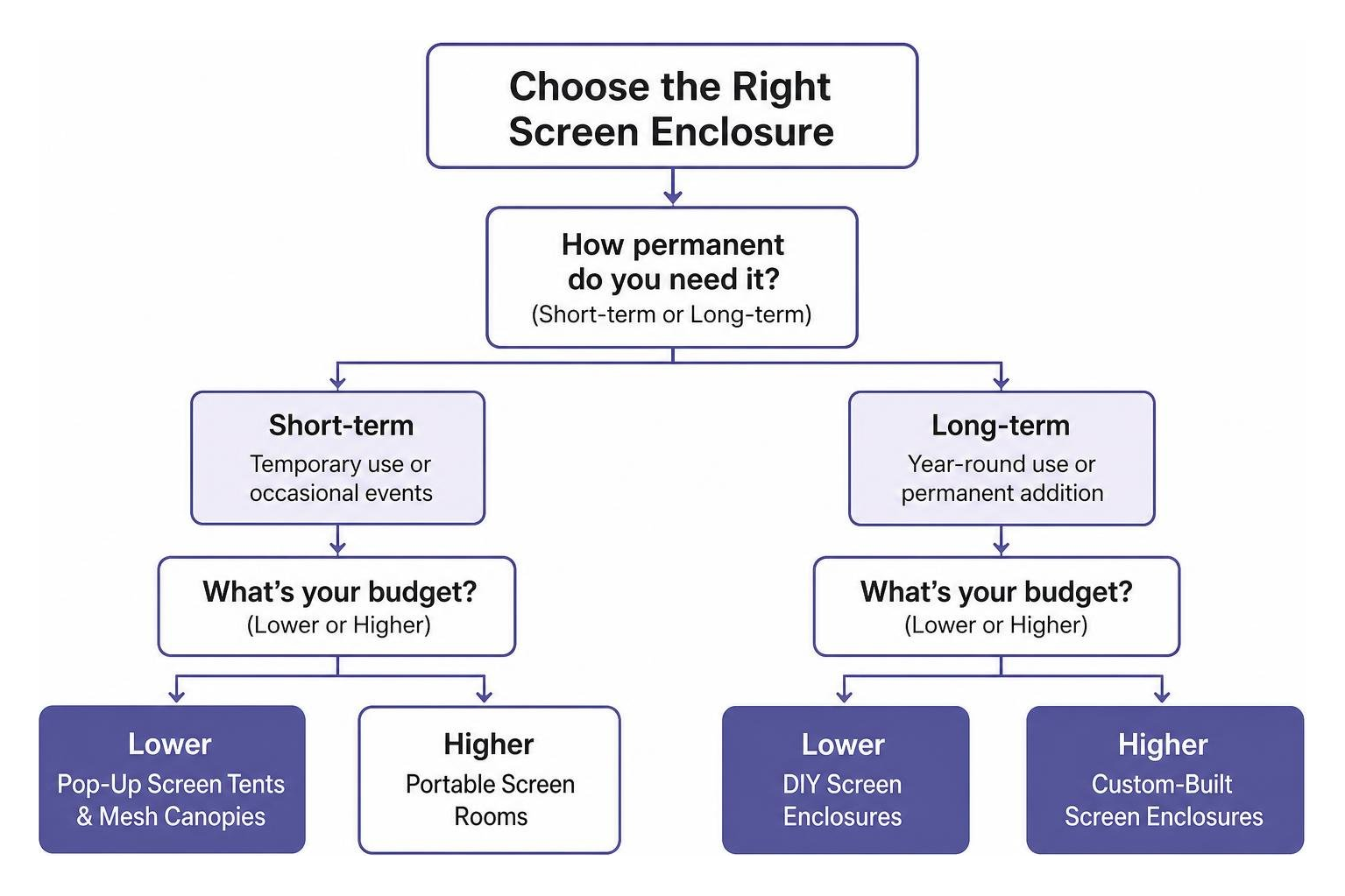
Screened enclosures generally fall into five categories, ranging from temporary and modular options to fully custom, permanent structures. They differ mainly in permanence, cost, and protection. Understanding the full spectrum helps homeowners see why a permanent, engineered structure is the right long-term investment for Florida weather.
1. Temporary Pop-Up Screen Tents and Mesh Canopies
At the most basic end of the spectrum are pop-up screen tents and portable mesh canopies, often used for camping trips, weekend barbecues, or tailgating. Built with lightweight steel or fiberglass frames and polyester fabric canopies, these units fold down into compact carry bags and require no permanent construction.
While convenient for occasional outdoor gatherings, these lightweight fabrics and tension rods cannot withstand sustained winds, heavy subtropical downpours, or persistent UV exposure over multiple seasons, which is why they are not a substitute for a permanent enclosure.
2. Modular DIY Screen Enclosure Kits and No-Dig Panels
Some homeowners consider modular screen kits, which use pre-cut, pre-drilled aluminum framing channels paired with standard screen mesh panels to enclose small concrete slabs or ground-level decks. These kits are generally intended as a short-term or transitional solution rather than a permanent home addition.
Homeowners weighing the tradeoffs between a self-assembled kit and a professionally engineered structure can learn more about structural planning and fastening techniques in our ultimate guide to DIY aluminum pool enclosure installation.
3. Custom Aluminum Lanai Screened Enclosures
For homeowners who want to seamlessly blend their indoor living rooms with their outdoor patios, custom aluminum lanais are the premier choice. These permanent home additions are fabricated on-site using heavy-duty, corrosion-resistant structural aluminum extrusions.
Custom lanais are engineered to attach directly to your home’s existing fascia or roofline, effectively expanding your usable square footage under a shared roof or insulated structural panel system. They offer several distinct advantages:
- Seamless Indoor-Outdoor Flow: Large sliding screen doors and open-span screen walls create a natural transition from your living room or kitchen directly onto your patio.
- Custom Architectural Integration: Framing members can be color-matched and sized to complement the rooflines, wall contours, and style of your home.
- Engineered Durability: Unlike off-the-shelf kits, custom lanais are engineered to satisfy stringent Florida building codes and wind-load requirements.
Homeowners considering a permanent expansion can dive deeper by exploring our custom aluminum lanai enclosures guide. To help plan your project budget accurately, we also provide a detailed breakdown for understanding lanai cage replacement and construction costs.
4. Full Pool Cages and Birdcage Screened Enclosures
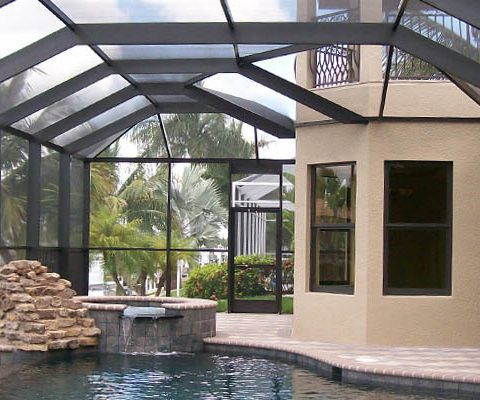
A birdcage is a complete, multi-sided aluminum screen structure engineered to span an entire swimming pool deck and patio area. In communities across Fort Myers, Cape Coral, and Bonita Springs, pool cages are essential fixtures that drastically reduce maintenance time.
- Debris & Pest Protection: A full screen dome keeps out leaves, pine needles, frogs, snakes, and insects, keeping pool water clean and cutting filtration costs.
- Thermal Comfort: The overhead mesh screens filter intense midday sun, keeping the deck surface cooler underfoot.
- Structural Lifespan: Extruded aluminum frames resist corrosion from pool chemicals and coastal humidity.
To weigh the structural pros and cons of these grand enclosures, review our guide to birdcage pool enclosures pros cons and cost considerations. For a comprehensive look at frame longevity, see our article on why aluminum pool screen enclosures stand up to the weather.
If you live along a fairway in places like Sanibel or North Fort Myers, consider specialized mesh upgrades. You can learn how to protect your pool cage with golf ball proof screening to prevent errant shots from tearing your enclosure panels.
5. Retractable Magnetic Mesh and Privacy Screens
Some smaller retractable and magnetic screen accessories exist on the market for garage openings, French doors, or specialty spots around a yard, typically as lightweight, non-structural add-ons rather than full enclosures. These products are generally used to supplement, not replace, a permanent screened structure, and they are not part of the engineered building systems this article otherwise focuses on.
Key Factors to Consider When Selecting an Enclosure
Selecting the right screen enclosure involves balancing aesthetic appeal, structural strength, and functional requirements.
Sizing and Patio Dimensions
Before buying materials or ordering a kit, measure your space accurately:
- Measure the length, width, and height of your concrete slab or deck.
- Add several inches of clearance around planned dining sets, grills, and lounge chairs.
- Verify that overhead clearance leaves ample room for ceiling fans, exterior lighting fixtures, and out-swinging access doors.
Mesh Types and Density
Not all screen fabrics perform the same:
- Standard 18×14 Fiberglass Mesh: The industry standard for pool cages and lanais; provides great airflow and everyday insect protection.
- 20×20 “No-See-Um” Mesh: A tighter weave designed specifically to keep out tiny biting midges and gnats common near Pine Island and Fort Myers Beach waterways.
- Solar Screen: Denser, UV-blocking yarn that reduces heat transfer and glares by up to 65% to 90%.
- Pet-Resistant Heavy-Duty Polyester: Tear-resistant mesh coated in vinyl, built to withstand clawing dogs, climbing cats, and wildlife.
Structural Integrity and Wind-Load Standards
Southwest Florida experiences intense tropical storms and hurricanes. Permanent outdoor structures must be securely anchored to concrete footers using high-grade stainless steel or corrosion-resistant fasteners.
Building codes dictate specific wind-load calculations depending on your distance from the coast. To learn how engineered bracing and proper maintenance safeguard your investment, read our guide on how to hurricane proof your screened enclosure.
Eco-Friendly Materials and Maintenance
Sustainability-minded homeowners can look for:
- Recycled Extruded Aluminum: Aluminum is endlessly recyclable without losing its structural integrity.
- FSC-Certified Accents: Ensures any integrated wood privacy slats or accent posts are sustainably harvested.
- Routine Mesh Restoration: Rather than replacing an entire structural frame, you can refresh aging screens over time by reviewing professional rescreening service options.
Cost Breakdown: Pop-Up Kits vs. Custom Installations
Understanding the financial commitment upfront helps you choose a solution that aligns with both your budget and long-term property goals. The table below is provided for general comparison purposes to illustrate why permanent, engineered structures deliver far greater long-term value than temporary alternatives.
| Enclosure Category | Typical Cost Range | Primary Materials | Expected Lifespan | Best Application |
|---|---|---|---|---|
| Pop-Up Screen Tents | $100 – $180 | Steel/Fiberglass, Polyester Fabric | 1 – 3 Seasons | Picnics, camping, temporary yard shade |
| DIY Modular Kits | $1,200 – $3,500 | Lightweight Aluminum, Standard Mesh | 3 – 7 Years | Weekend DIY patio and deck enclosures |
| Custom Screened Lanai | Custom Quote | Structural Aluminum, Heavy-Duty Mesh | 15 – 25+ Years | Permanent, code-compliant home additions |
| Full Birdcage Pool Enclosure | Custom Quote | Engineered Extruded Aluminum, Custom Screening | 20+ Years | Complete pool, deck, and patio enclosures |
For a detailed analysis of site preparation, engineering costs, and architectural choices, check our guides on how much enclosing a lanai really costs and our comprehensive guide to screen enclosure options and costs.
While temporary and modular options may have a shorter lead time, permanent custom builds follow a dedicated timeline that includes on-site measuring, structural engineering, local municipal permitting, concrete foundation prep, and professional extrusion assembly, resulting in a durable structure backed by structural warranties.
Frequently Asked Questions About Screen Enclosures
How do screen enclosures keep out heavy rain while maintaining airflow?
Open screen mesh allows breezes to pass freely, which means driving rain can enter through standard vertical walls. To enjoy outdoor living during summer rain showers, custom lanais combine sloped, insulated structural roof panels (or integrated pan roofs) with perimeter gutters and waterproof joint sealants. The solid composite roof shields you from direct overhead downpours, while the breathable screen side walls maintain continuous cross-ventilation.
Over time, Florida storms can stretch or loosen mesh panels. If your enclosure begins to collect standing water or sag, scheduling a Fort Myers pool rescreening will restore proper mesh tension and water shedding.
What customer review ratings indicate a reliable enclosure product?
When purchasing retail kits or prefabricated screen tents online, look for products that hold at least a 4.4-star average rating across hundreds of verified customer purchases. Pay close attention to reviews discussing:
- Frame stability during moderate winds
- Durability of corner zipper seams and velcro attachments
- UV resistance of the fabric roof after several months in direct sunlight
- Straightforward manufacturer return policies and replacement part availability
For custom installations, customer satisfaction is reflected in long-term contractor reviews, verifiable local licensing, comprehensive structural warranties, and a demonstrated track record of meeting regional Florida building codes.
How do installation requirements differ between portable tents and permanent structures?
The installation requirements vary dramatically based on the type of enclosure:
- Portable Pop-Up Tents: Require no ground preparation or permitting. They are secured using simple ground stakes or weighted sandbags placed on the feet.
- Modular DIY Kits: Can be mounted to an existing level deck or patio using concrete masonry screws (Tapcons) or no-dig ground anchors. Permitting rules depend on your municipal guidelines and whether the kit is considered a temporary or permanent structure.
- Permanent Custom Enclosures: Require professional engineering drawings, municipal building permits, HOA architectural approvals, and structural anchoring into engineered concrete footers to meet local wind-load codes.
Upgrade Your Florida Backyard Living Experience
A thoughtfully chosen screen enclosure protects you from mosquitoes, filters the harsh sun, keeps out debris, and expands your home’s usable living space.
Whether you need a simple portable canopy for occasional weekend barbecues or an engineered aluminum structure built for everyday coastal living, selecting the right design makes all the difference.
If you are ready to enhance your home with a permanent, hurricane-engineered aluminum enclosure built to withstand Southwest Florida weather, our team at Aluminum Concepts Construction, Inc. is here to help. Explore our custom Fort Myers screened rooms to learn more about our process, or contact us today to schedule your personalized on-site consultation.
Comments are Disabled